


- Afhalen na 1 uur in een winkel met voorraad
- Gratis thuislevering in België vanaf € 30
- Ruim aanbod met 7 miljoen producten
- Afhalen na 1 uur in een winkel met voorraad
- Gratis thuislevering in België vanaf € 30
- Ruim aanbod met 7 miljoen producten





€ 40,45
+ 80 punten
Omschrijving
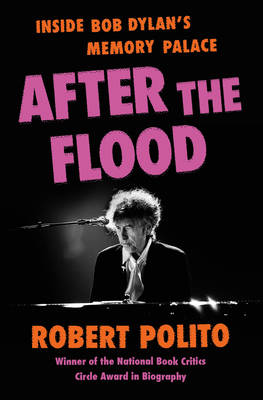
A familiar narrative goes: Bob Dylan, the voice of sixties counterculture, disappeared in the 1970s, then released arguably the worst music of his career in the 1980s--only to be resurrected in 2016, when he was controversially awarded the Nobel Prize in Literature. Dylan's concerts once began with an announcer intoning a deadpan version of just such a narrative.
That is not this story.
Here, instead, is Dylan's second thirty years. Across an abecedarium of chapters surveying his albums, performances, films, and books since 1991--since that rainy February night in New York City when Dylan, then forty-nine, accepted a Grammy Lifetime Achievement Award, signaling in effect that his extraordinary vocation as a vital and indispensable creative force had ended, was over--After the Flood reveals Dylan's creative output during the last three decades as his most ambitious and accomplished yet.
Drawing on thousands of pages from Dylan's newly opened archive in Tulsa, Oklahoma, and anatomizing hundreds of published and unpublished lyrics, liner notes, and more, celebrated poet and biographer Robert Polito demonstrates how Dylan evolved a late musical style that has equally embodied and resisted its era, interweaving folk process and American and world history, and transforming spectral cultural memory into devastating inspiration. Polito thus establishes Dylan as an intensely literary songwriter whose recent writings, especially, are dynamic, intricate, and far-reaching collages.
Between Good as I Been to You (1992) and Shadow Kingdom (2023), across Desert Storm, 9/11, and COVID-19, Polito shows that Dylan revitalized lines and contexts from sources as diverse as classical Greece and Rome, the American Civil War, and film noir, tipping Henry Timrod, poet laureate of the Confederacy, into Muddy Waters; slanting Herman Melville, John Winthrop, and Henry Wadsworth Longfellow into Stephen Foster, Dan Emmett, and Al Jolson; and secreting Marcel Proust into his own literal California backyard--to touch on just a few of the storerooms inside Dylan's astonishing "memory palace."
Imaginatively researched, boldly arranged, and with elegiac insights into the cunning behind his songs, After the Flood is an essential revision and continuation of the Dylan saga, and a must-read for all Dylan enthusiasts.
That is not this story.
Here, instead, is Dylan's second thirty years. Across an abecedarium of chapters surveying his albums, performances, films, and books since 1991--since that rainy February night in New York City when Dylan, then forty-nine, accepted a Grammy Lifetime Achievement Award, signaling in effect that his extraordinary vocation as a vital and indispensable creative force had ended, was over--After the Flood reveals Dylan's creative output during the last three decades as his most ambitious and accomplished yet.
Drawing on thousands of pages from Dylan's newly opened archive in Tulsa, Oklahoma, and anatomizing hundreds of published and unpublished lyrics, liner notes, and more, celebrated poet and biographer Robert Polito demonstrates how Dylan evolved a late musical style that has equally embodied and resisted its era, interweaving folk process and American and world history, and transforming spectral cultural memory into devastating inspiration. Polito thus establishes Dylan as an intensely literary songwriter whose recent writings, especially, are dynamic, intricate, and far-reaching collages.
Between Good as I Been to You (1992) and Shadow Kingdom (2023), across Desert Storm, 9/11, and COVID-19, Polito shows that Dylan revitalized lines and contexts from sources as diverse as classical Greece and Rome, the American Civil War, and film noir, tipping Henry Timrod, poet laureate of the Confederacy, into Muddy Waters; slanting Herman Melville, John Winthrop, and Henry Wadsworth Longfellow into Stephen Foster, Dan Emmett, and Al Jolson; and secreting Marcel Proust into his own literal California backyard--to touch on just a few of the storerooms inside Dylan's astonishing "memory palace."
Imaginatively researched, boldly arranged, and with elegiac insights into the cunning behind his songs, After the Flood is an essential revision and continuation of the Dylan saga, and a must-read for all Dylan enthusiasts.
Specificaties
Betrokkenen
- Auteur(s):
- Uitgeverij:
Inhoud
- Aantal bladzijden:
- 384
- Taal:
- Engels
Eigenschappen
- Productcode (EAN):
- 9780871402936
- Verschijningsdatum:
- 27/01/2026
- Uitvoering:
- Hardcover
- Formaat:
- Genaaid
- Afmetingen:
- 162 mm x 235 mm
- Gewicht:
- 625 g


Alleen bij Standaard Boekhandel
+ 80 punten op je klantenkaart van Standaard Boekhandel
Cadeau

AANGERADEN


Beoordelingen
We publiceren alleen reviews die voldoen aan de voorwaarden voor reviews. Bekijk onze voorwaarden voor reviews.