


- Afhalen na 1 uur in een winkel met voorraad
- Gratis thuislevering in België vanaf € 30
- Ruim aanbod met 7 miljoen producten
- Afhalen na 1 uur in een winkel met voorraad
- Gratis thuislevering in België vanaf € 30
- Ruim aanbod met 7 miljoen producten





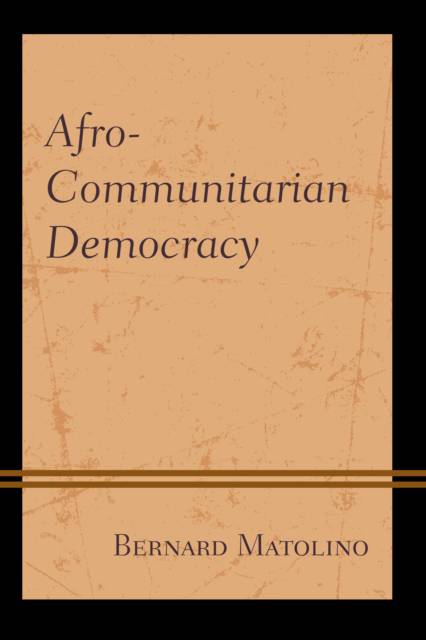
Afro-Communitarian Democracy
Bernard Matolino
€ 195,45
+ 390 punten
Omschrijving
In going beyond African socialism and consensual democracy's use of communitarianism, Bernard Matolino demonstrates that there is a mode of understanding communitarianism that need not necessarily be traditionalist. It is from this ever-evolving communitarian notion that an African-rooted form of democracy may arise. Such a democratic theory is one that seeks to prioritize reality and factors that have shaped and continue to shape current experience of life on the African continent. The work advocates a new mode of communitarianism, without the idealism of traditional foundations of kin connections and one which takes the ontological equality of the community and the individual. Such a communitarian outlook will secure the basic requirements of democratization without abdicating its communitarian responsibility. The communitarian democratic theory advocated here takes seriously the particular situation of each individual and yet points out the need to appreciate the inevitability of the connections among the same individuals.
Specificaties
Betrokkenen
- Auteur(s):
- Uitgeverij:
Inhoud
- Aantal bladzijden:
- 190
- Taal:
- Engels
- Reeks:
Eigenschappen
- Productcode (EAN):
- 9781498588287
- Verschijningsdatum:
- 9/09/2019
- Uitvoering:
- Hardcover
- Formaat:
- Genaaid
- Afmetingen:
- 152 mm x 229 mm
- Gewicht:
- 449 g



Alleen bij Standaard Boekhandel
+ 390 punten op je klantenkaart van Standaard Boekhandel
Cadeau

AANGERADEN


Beoordelingen
We publiceren alleen reviews die voldoen aan de voorwaarden voor reviews. Bekijk onze voorwaarden voor reviews.