


- Afhalen na 1 uur in een winkel met voorraad
- Gratis thuislevering in België vanaf € 30
- Ruim aanbod met 7 miljoen producten
- Afhalen na 1 uur in een winkel met voorraad
- Gratis thuislevering in België vanaf € 30
- Ruim aanbod met 7 miljoen producten





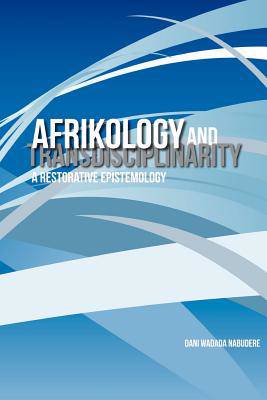
Afrikology and Transdisciplinarity. a Restorative Epistemology
A restorative epistemology
Dani Wadada Nabudere
Paperback | Engels
€ 54,45
+ 108 punten
Omschrijving
This monograph is intended to examine the epistemology of restorative rights in view of the continuing violation of rights in all aspects of life on the African continent and other parts of the world. It is based on the research, which the Marcus Garvey Pan-Afrikan Institute undertook between 2006-2008, under a cross-disciplinary research project entitled Restorative Justice and its Relationship to International Humanitarian Law, which resulted in a Comprehensive Report that was later discussed at an international conference in Nairobi in August 2008. This conference was opened by the Prime Minister of Kenya, Right Hon. Raila Odinga and attended by Ministers of Justice and Constitutional Affairs, judges and other ministers from the five countries in which the research was carried out, Uganda, Kenya, Tanzania, Rwanda and Southern Sudan. The objective here is to relate the concept of restorative justice, in its broad and cross-disciplinary meaning to the epistemology of Afrikology and transdisciplinarity, which aim at breaking down disciplinary boundaries between the different academic disciplines, which inhibit our capabilities of looking at realities in a comprehensive, holistic manner; leading to the adoption of fragmented solutions to problems, which inevitably fail to address those problems. As stated in the monograph on the epistemology of Afrikology, knowledge is created holistically by the heart and the basis of the perceptions and experiences of the five senses. The knowledge created through the word, which ultimately constitutes the language and the community, is related to our cosmic forces and reason, which gives cosmic significance to our existence. We cannot therefore detach ourselves from these cosmic forces and reality must be examined from this combinatory holistic understanding.
Specificaties
Betrokkenen
- Auteur(s):
- Uitgeverij:
Inhoud
- Aantal bladzijden:
- 210
- Taal:
- Engels
Eigenschappen
- Productcode (EAN):
- 9780798303026
- Verschijningsdatum:
- 22/05/2012
- Uitvoering:
- Paperback
- Formaat:
- Trade paperback (VS)
- Afmetingen:
- 156 mm x 234 mm
- Gewicht:
- 299 g


Alleen bij Standaard Boekhandel
+ 108 punten op je klantenkaart van Standaard Boekhandel
Cadeau

AANGERADEN


Beoordelingen
We publiceren alleen reviews die voldoen aan de voorwaarden voor reviews. Bekijk onze voorwaarden voor reviews.