


- Afhalen na 1 uur in een winkel met voorraad
- Gratis thuislevering in België vanaf € 30
- Ruim aanbod met 7 miljoen producten
- Afhalen na 1 uur in een winkel met voorraad
- Gratis thuislevering in België vanaf € 30
- Ruim aanbod met 7 miljoen producten





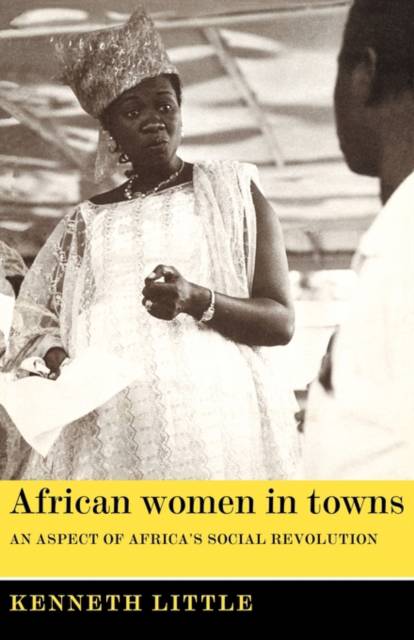
African Women in Towns
An Aspect of Africa's Social Revolution
Kenneth Lindsay Little, Kenneth Little
Paperback | Engels
€ 64,95
+ 129 punten
Omschrijving
This 1973 book analyses the changing position of women in an urban context in sub-Saharan Africa. In spite of the fact that women, at the time of publication, were often important leaders of opinion and in these countries the proportion of women in professional work was at least as large as in Britain, few researchers and even fewer television and newspaper reporters paid them sufficient attention. As the new role of women in Africa was peculiarly a phenomenon of the city, Professor Little's book uses the concept of urbanization in order to analyse the radical changes taking place. He shows how certain women's movements were growing out of the African woman's desire for a new relationship with the man. This leads him to consider the part played by women in the political arena, and women's position not only in monogamous marriage, but also in extra-marital and sexual relationships.
Specificaties
Betrokkenen
- Auteur(s):
- Uitgeverij:
Inhoud
- Aantal bladzijden:
- 252
- Taal:
- Engels
Eigenschappen
- Productcode (EAN):
- 9780521098199
- Verschijningsdatum:
- 28/02/1974
- Uitvoering:
- Paperback
- Formaat:
- Trade paperback (VS)
- Afmetingen:
- 140 mm x 216 mm
- Gewicht:
- 322 g


Alleen bij Standaard Boekhandel
+ 129 punten op je klantenkaart van Standaard Boekhandel
AANGERADEN


Beoordelingen
We publiceren alleen reviews die voldoen aan de voorwaarden voor reviews. Bekijk onze voorwaarden voor reviews.