


- Afhalen na 1 uur in een winkel met voorraad
- Gratis thuislevering in België vanaf € 30
- Ruim aanbod met 7 miljoen producten
- Afhalen na 1 uur in een winkel met voorraad
- Gratis thuislevering in België vanaf € 30
- Ruim aanbod met 7 miljoen producten





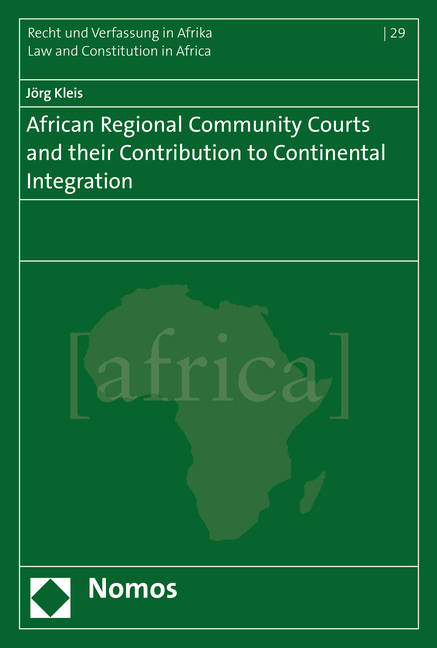
African Regional Community Courts and Their Contribution to Continental Integration
Jorg Kleis
€ 93,45
+ 186 punten
Omschrijving
African Regional Communities have been portrayed by international legal scholars on a regular basis. Yet, this is only partially the case with regard to their respective judicial organs. For the first time a contribution exclusively focuses on the West African ECOWAS, the Southern African SADC and the East African EAC courts and their jurisprudence. After outlining the potential of community courts to contribute to integration follows a microscopic analysis of pertinent extracts from their judgments regarding the courts' methodology, their jurisdiction and procedural law, the hierarchy between community and national legislation, the question of regional human rights protection and the essential obstacle to integration, which is non-compliance. The research is completed by evaluating whether the three courts had a share in the integration process and to what extent they are able to further promote integration in the future.
Specificaties
Betrokkenen
- Auteur(s):
- Uitgeverij:
Inhoud
- Aantal bladzijden:
- 391
- Taal:
- Engels
- Reeks:
- Reeksnummer:
- nr. 29
Eigenschappen
- Productcode (EAN):
- 9783848731329
- Verschijningsdatum:
- 01/06/2016
- Uitvoering:
- Paperback
- Formaat:
- Trade paperback (VS)
- Afmetingen:
- 153 mm x 227 mm
- Gewicht:
- 276 g


Alleen bij Standaard Boekhandel
+ 186 punten op je klantenkaart van Standaard Boekhandel
Cadeau

AANGERADEN


Beoordelingen
We publiceren alleen reviews die voldoen aan de voorwaarden voor reviews. Bekijk onze voorwaarden voor reviews.