


- Afhalen na 1 uur in een winkel met voorraad
- Gratis thuislevering in België vanaf € 30
- Ruim aanbod met 7 miljoen producten
- Afhalen na 1 uur in een winkel met voorraad
- Gratis thuislevering in België vanaf € 30
- Ruim aanbod met 7 miljoen producten





€ 124,45
+ 248 punten
Uitvoering
Omschrijving
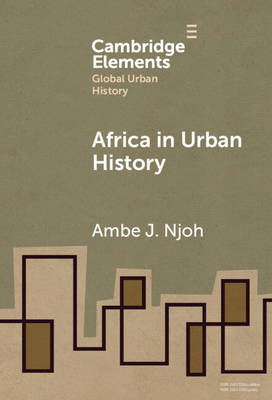
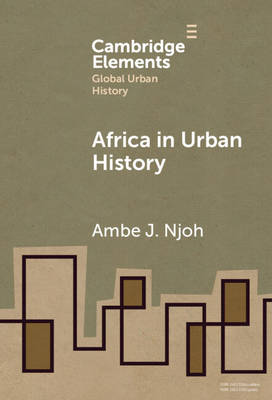
This Element in Global Urban History seeks to promote understanding of the urban history of Africa. It does so by undertaking four main tasks. Firstly, it employs race, ethnicity, class, and conflict theory as conceptual frameworks to analyze the spatial structures, social, and political-economic dynamics of African cities from global, comparative, and transnational perspectives. Secondly, it proposes a new typology of the continent's cities. Thirdly, it identifies and draws into focus an important but oft-ignored part of Africa's urban history, namely Indigenous cities. It focuses more intensely on the few that still exist to date. Fourthly, it employs conflict, functional, and symbolic interactionist theories as well as elements of the race ideology to explain the articulation of racism, ethnicity, and classism in the continent's urban space. This is done mainly but not exclusively from historical perspectives.
Specificaties
Betrokkenen
- Auteur(s):
- Uitgeverij:
Inhoud
- Aantal bladzijden:
- 90
- Taal:
- Engels
- Reeks:
Eigenschappen
- Productcode (EAN):
- 9781009500722
- Verschijningsdatum:
- 30/01/2025
- Uitvoering:
- Hardcover
- Formaat:
- Genaaid
- Afmetingen:
- 152 mm x 229 mm
- Gewicht:
- 290 g


Alleen bij Standaard Boekhandel
+ 248 punten op je klantenkaart van Standaard Boekhandel
Cadeau

AANGERADEN


Beoordelingen
We publiceren alleen reviews die voldoen aan de voorwaarden voor reviews. Bekijk onze voorwaarden voor reviews.