


- Afhalen na 1 uur in een winkel met voorraad
- Gratis thuislevering in België vanaf € 30
- Ruim aanbod met 7 miljoen producten
- Afhalen na 1 uur in een winkel met voorraad
- Gratis thuislevering in België vanaf € 30
- Ruim aanbod met 7 miljoen producten





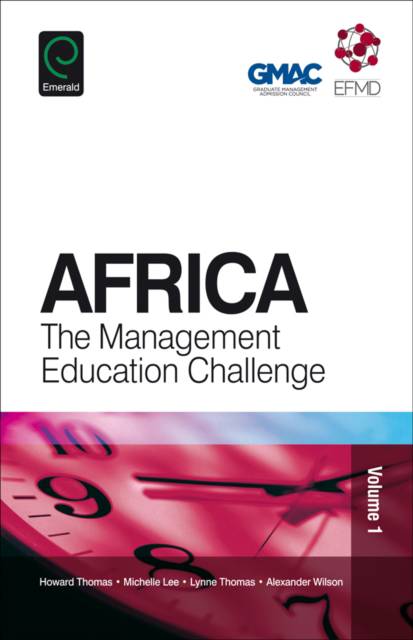
Africa
The Management Education Challenge
Michelle Lee, Lynne Thomas, Alexander Wilson
Hardcover | Engels
€ 106,45
+ 212 punten
Omschrijving
This is the first of the two volumes, written with strong support from EFMD (The European Foundation for Management Development) and GMAC (The Graduate Management Admissions Council), aimed at understanding and examining the challenges involved in management education across Africa. The common perception of Africa is as a global growth region, and a continent on the move, with a parallel, huge demand for managerial skills to leverage the potential for economic growth. The authors, through a fine-grained, face-to-face, interview process, explore the perspectives, and interactions between, management educators and other business, and government stakeholders as they seek to close the management education gap. Africa has no collective identity. Therefore, it is important to understand the diverse cultures, histories and contexts underlying the 54 member states. With this is mind, the book "maps" the diverse landscape of Africa in the earlier chapters. This provides the framework around which subsequent chapters can reflect sensibly on the past evolution of alternative management education approaches in Africa, and the current landscape.
Specificaties
Betrokkenen
- Auteur(s):
- Uitgeverij:
Inhoud
- Aantal bladzijden:
- 150
- Taal:
- Engels
Eigenschappen
- Productcode (EAN):
- 9781786356222
- Verschijningsdatum:
- 1/08/2016
- Uitvoering:
- Hardcover
- Formaat:
- Genaaid
- Afmetingen:
- 155 mm x 231 mm
- Gewicht:
- 476 g



Alleen bij Standaard Boekhandel
+ 212 punten op je klantenkaart van Standaard Boekhandel
Cadeau

AANGERADEN


Beoordelingen
We publiceren alleen reviews die voldoen aan de voorwaarden voor reviews. Bekijk onze voorwaarden voor reviews.