


- Afhalen na 1 uur in een winkel met voorraad
- Gratis thuislevering in België vanaf € 30
- Ruim aanbod met 7 miljoen producten
- Afhalen na 1 uur in een winkel met voorraad
- Gratis thuislevering in België vanaf € 30
- Ruim aanbod met 7 miljoen producten





€ 254,45
+ 508 punten
Uitvoering
Omschrijving
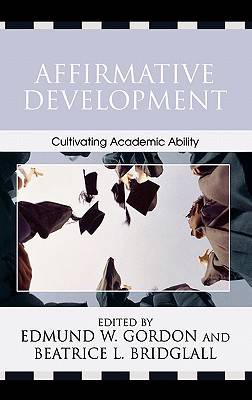
According to Gordon and Bridglall, the ability to learn is more of a developed human capacity than a fixed aptitude with which one is born. They argue that the emergence of academic ability is associated with exposure to specialized cultures that privilege the attitudes, knowledge, and skills that schools reward. Children who are born to and raised in these cultures tend to do well in school, while those who are not exposed to such cultures tend seldom rise to high levels of academic achievement. Through a collection of interesting essays, Affirmative Development: Cultivating Academic Ability attempts to address how we can deliberately develop academic ability in those children who are not raised under conditions that predispose them to develop high levels of academic ability.
Specificaties
Betrokkenen
- Auteur(s):
- Uitgeverij:
Inhoud
- Aantal bladzijden:
- 310
- Taal:
- Engels
- Reeks:
Eigenschappen
- Productcode (EAN):
- 9780742516588
- Verschijningsdatum:
- 20/12/2006
- Uitvoering:
- Hardcover
- Formaat:
- Genaaid
- Afmetingen:
- 160 mm x 231 mm
- Gewicht:
- 544 g


Alleen bij Standaard Boekhandel
+ 508 punten op je klantenkaart van Standaard Boekhandel
Cadeau

AANGERADEN


Beoordelingen
We publiceren alleen reviews die voldoen aan de voorwaarden voor reviews. Bekijk onze voorwaarden voor reviews.