


- Afhalen na 1 uur in een winkel met voorraad
- Gratis thuislevering in België vanaf € 30
- Ruim aanbod met 7 miljoen producten
- Afhalen na 1 uur in een winkel met voorraad
- Gratis thuislevering in België vanaf € 30
- Ruim aanbod met 7 miljoen producten





€ 220,45
+ 440 punten
Omschrijving
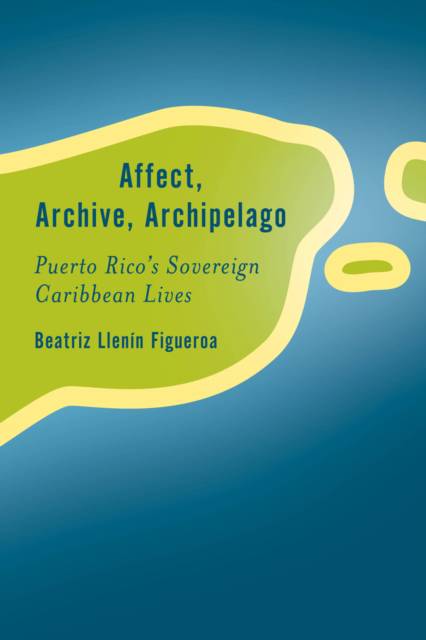
Inspired by Édouard Glissant's and Marta Aponte Alsina's critical-creative work, this book explores how Puerto Rico's affective archive of Caribbean relations, from the nineteenth century through the twenty-first, has envisioned and embodied decolonization and sovereignty in relation to the archipelagic, the sea, and Caribbean regionalism. The book's transdisciplinary archive includes historical figures and their legacies; political and activist thought, textuality, and action as performative interventions; and performance and live arts pieces, objects, materialities, and texts as political/activist actions. Affect, Archive, Archipelago begins by delving into the historical-political figures of Ramón Emeterio Betances, Luisa Capetillo, and Pedro Albizu Campos. It then encounters the work of the live arts collective Agua, Sol y Sereno; the political/activist work of Amigxs del MAR, Comuna Caribe, Mujeres que Abrazan la Mar, and Coalición 8M; and Teresa Hernández's transdisciplinary artistic trajectory. Finally, stemming from the book's argument and the immediate historical-political-affective context of Puerto Rico's summer 2019 rebellion (Verano Boricua), the book offers some reflections and proposals for furthering decolonial, sovereign, archipelagic, and reparatory horizons for Puerto Rico
Specificaties
Betrokkenen
- Auteur(s):
- Uitgeverij:
Inhoud
- Aantal bladzijden:
- 298
- Taal:
- Engels
- Reeks:
Eigenschappen
- Productcode (EAN):
- 9781538151440
- Verschijningsdatum:
- 4/04/2022
- Uitvoering:
- Hardcover
- Formaat:
- Genaaid
- Afmetingen:
- 152 mm x 229 mm
- Gewicht:
- 607 g


Alleen bij Standaard Boekhandel
+ 440 punten op je klantenkaart van Standaard Boekhandel
Cadeau

AANGERADEN


Beoordelingen
We publiceren alleen reviews die voldoen aan de voorwaarden voor reviews. Bekijk onze voorwaarden voor reviews.