


- Afhalen na 1 uur in een winkel met voorraad
- Gratis thuislevering in België vanaf € 30
- Ruim aanbod met 7 miljoen producten
- Afhalen na 1 uur in een winkel met voorraad
- Gratis thuislevering in België vanaf € 30
- Ruim aanbod met 7 miljoen producten





Omschrijving
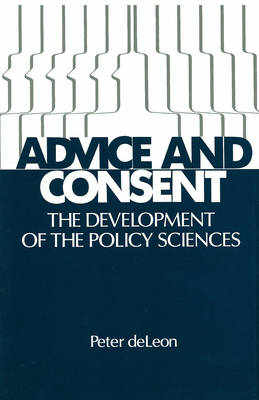
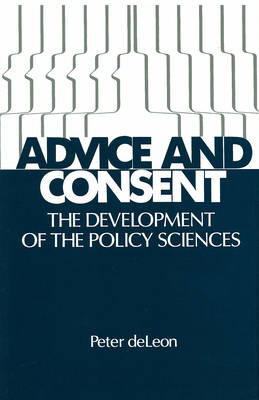
Policy analysis, as a practical matter, is hardly new. Throughout history, rulers have sought advice from priests or sages, and monarchs have conferred with counselors. The emergence of empirical social research in the nineteenth century laid the groundwork for policy advice that was more than an idiosyncratic political exercise, but it was not until well into this century that the systematic examination of policy issues became feasible. Advice and Consent traces the recent course of the "policy sciences," a term coined in 1951 to describe an analytic approach that draws on political science, sociology, law, economics, psychology, and operations research to examine specific social problems in context. Peter deLeon's unique contribution is to delineate two separate but related currents in the development of the policy sciences: first, the evolution of intellectual tools for analysis ("advice"); and second, the evolution of a perceived need for policy research as prompted by events such as the war on poverty ("consent"). Peter deLeon's concise and literate account of how these two trends shaped the policy sciences and affected each other clarifies the present state of policy research, explores its failure to realize fully its ideals, and frames the challenges facing the policy sciences as they struggle to complete their transformation from academic fancy to institutional fact.
Specificaties
Betrokkenen
- Auteur(s):
- Uitgeverij:
Inhoud
- Aantal bladzijden:
- 143
- Taal:
- Engels
Eigenschappen
- Productcode (EAN):
- 9780871542151
- Verschijningsdatum:
- 28/01/1989
- Uitvoering:
- Hardcover
- Formaat:
- Genaaid
- Afmetingen:
- 160 mm x 231 mm
- Gewicht:
- 385 g


Alleen bij Standaard Boekhandel
Cadeau

AANGERADEN


Beoordelingen
We publiceren alleen reviews die voldoen aan de voorwaarden voor reviews. Bekijk onze voorwaarden voor reviews.