


- Afhalen na 1 uur in een winkel met voorraad
- Gratis thuislevering in België vanaf € 30
- Ruim aanbod met 7 miljoen producten
- Afhalen na 1 uur in een winkel met voorraad
- Gratis thuislevering in België vanaf € 30
- Ruim aanbod met 7 miljoen producten





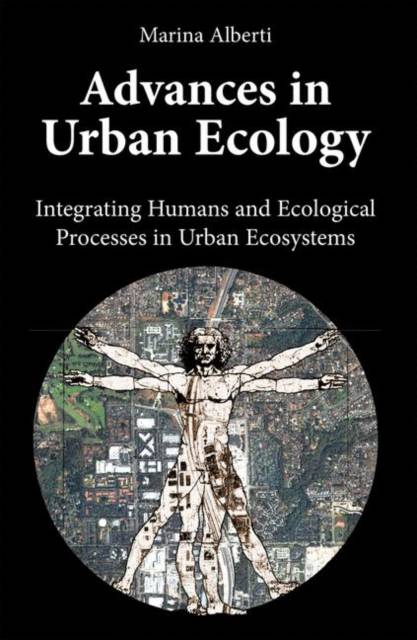
Advances in Urban Ecology
Integrating Humans and Ecological Processes in Urban Ecosystems
Marina Alberti
Paperback | Engels
€ 195,95
+ 391 punten
Uitvoering
Omschrijving
Natural and social scientists face a great challenge in the coming decades: to understand the role that humans play in ecosystems, particularly urban ecosystems. Cities and urbanizing regions are complex coupled hum- natural systems in which people are the dominant agents. As humans transform natural landscapes into highly human-dominated environments, they create a new set of ecological conditions by changing ecosystem processes and dynamics. Urbanization changes natural habitats and species composition, alters hydrological systems, and modifies energy flows and nutrient cycles. Although the impacts of urban development on ecosystems occur locally, they cause environmental changes at larger scales. Envir- mental changes resulting from urbanization influence human behaviors and dynamics and affect human health and well-being. Remarkable progress has been made in studying the impact of urban de- lopment on ecosystem functions (McDonnell and Pickett 1993, McDonnell et al. 1997, Grimm et al. 2000, Pickett et al. 2001, Alberti et al. 2003), yet the interactions and feedback between human processes and ecosystem dynamics in urbanizing regions are still poorly understood. In this book I argue that new syntheses across the natural and social sciences are necessary if urban and ecological dynamics are to be successfully integrated into a common fra- work to advance urban ecology research. If we remain within the traditional disciplinary boundaries, we will not make progress towards a theory of urban ecosystems as coupled human-ecological systems, because no single disc- line can provide an unbiased and integrated perspective.
Specificaties
Betrokkenen
- Auteur(s):
- Uitgeverij:
Inhoud
- Aantal bladzijden:
- 366
- Taal:
- Engels
Eigenschappen
- Productcode (EAN):
- 9780387922911
- Verschijningsdatum:
- 10/12/2008
- Uitvoering:
- Paperback
- Formaat:
- Trade paperback (VS)
- Afmetingen:
- 155 mm x 231 mm
- Gewicht:
- 635 g


Alleen bij Standaard Boekhandel
+ 391 punten op je klantenkaart van Standaard Boekhandel
Cadeau

AANGERADEN


Beoordelingen
We publiceren alleen reviews die voldoen aan de voorwaarden voor reviews. Bekijk onze voorwaarden voor reviews.