


- Afhalen na 1 uur in een winkel met voorraad
- Gratis thuislevering in België vanaf € 30
- Ruim aanbod met 7 miljoen producten
- Afhalen na 1 uur in een winkel met voorraad
- Gratis thuislevering in België vanaf € 30
- Ruim aanbod met 7 miljoen producten





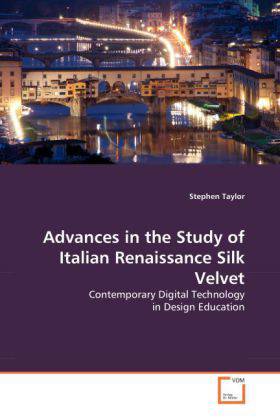
Advances in the Study of Italian Renaissance Silk Velvet
Contemporary Digital Technology in Design Education
Stephen Taylor
Paperback | Engels
€ 75,45
+ 150 punten
Omschrijving
A group of Italian Renaissance velvet textiles, created over three centuries as part of the mercantile system, were traded over time in Europe until 1927, when they were shipped to the U.S. as educational objects. Traded again, they eventually came to rest as the Cranbrook Collection, laying undisturbed for over fifty years in the archives of the New Brunswick Museum in Saint John, New Brunswick, Canada. These fragments form the basis for this thesis, which outlines a process of digitally recording textile fragments, illustrating a procedure for creating a virtual silk mill for museum display and Internet use, showing how a digital collection of textile images can be used in a virtual museum setting. The importance of digital technology in the learning environment, as a tool for classroom and online course delivery in crafts, textile design and museum study is also discussed, including a sample lesson plan using digitised textile designs.
Specificaties
Betrokkenen
- Auteur(s):
- Uitgeverij:
Inhoud
- Aantal bladzijden:
- 124
- Taal:
- Engels
Eigenschappen
- Productcode (EAN):
- 9783639042573
- Verschijningsdatum:
- 3/07/2008
- Uitvoering:
- Paperback
- Afmetingen:
- 150 mm x 7 mm
- Gewicht:
- 201 g


Alleen bij Standaard Boekhandel
+ 150 punten op je klantenkaart van Standaard Boekhandel
Cadeau

AANGERADEN


Beoordelingen
We publiceren alleen reviews die voldoen aan de voorwaarden voor reviews. Bekijk onze voorwaarden voor reviews.