


- Afhalen na 1 uur in een winkel met voorraad
- Gratis thuislevering in België vanaf € 30
- Ruim aanbod met 7 miljoen producten
- Afhalen na 1 uur in een winkel met voorraad
- Gratis thuislevering in België vanaf € 30
- Ruim aanbod met 7 miljoen producten





€ 106,95
+ 213 punten
Uitvoering
Eenvoudig bestellen
Veilig betalen


Gratis thuislevering vanaf € 30 (via bpost)
Gratis levering in je Standaard Boekhandel
Omschrijving
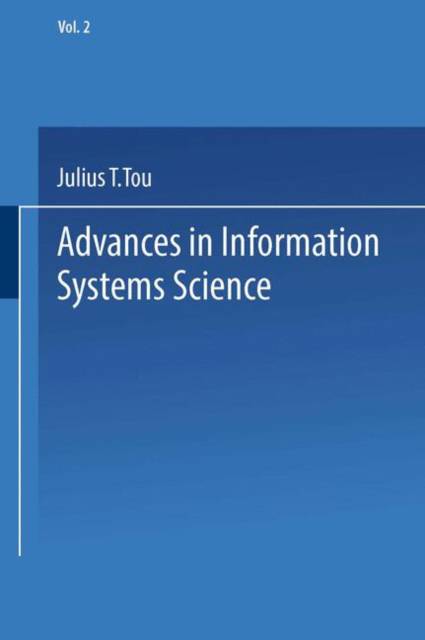
Engineering has long been thought of by the public as a profession tra- ditionally categorized into such branches as electrical, mechanical, chemical, industrial, civil, etc. This classification has served its purpose for the past half century; but the last decade has witnessed a tremendous change. A continuous transition from the practical to the theoretical has made technology overlap with science, and the enlargement of scope and broad- ened diversification have smeared the boundaries between traditional engi- neering and scientific fields. Engineering is rapidly becoming a diversified, multidisciplinary field of scientific endeavor. This has prompted us to regard modern engineering as a science, which has as its ingredients materials, energy, and information. In our complex and technologically-oriented society organizations are flooded with an enormous amount of management information. We are now faced with problems concerning the efficient use of communicated knowledge. The steady growth in the magnitude and complexity of informa- tion systems necessitates the development of new theories and techniques for solving these information problems.We demand instant access to pre- viously recorded information for decision making, and we require new meth- ods for analysis, recognition, processing, and display. As a consequence, information science has evolved out of necessity. Concerned with the theoretical basis of the organization, control, stor- age, retrieval, processing, and communication of information both by natural and artificial systems, information science is multidisciplinary in character. It covers a vast area of subject matter in the physical and biological sciences.
Specificaties
Betrokkenen
- Auteur(s):
- Uitgeverij:
Inhoud
- Aantal bladzijden:
- 351
- Taal:
- Engels
- Reeks:
Eigenschappen
- Productcode (EAN):
- 9781489958433
- Verschijningsdatum:
- 16/12/2013
- Uitvoering:
- Paperback
- Formaat:
- Trade paperback (VS)
- Afmetingen:
- 152 mm x 229 mm
- Gewicht:
- 489 g


Alleen bij Standaard Boekhandel
+ 213 punten op je klantenkaart van Standaard Boekhandel
CADEAU

AANGERADEN


Beoordelingen
We publiceren alleen reviews die voldoen aan de voorwaarden voor reviews. Bekijk onze voorwaarden voor reviews.