


- Afhalen na 1 uur in een winkel met voorraad
- Gratis thuislevering in België vanaf € 30
- Ruim aanbod met 7 miljoen producten
- Afhalen na 1 uur in een winkel met voorraad
- Gratis thuislevering in België vanaf € 30
- Ruim aanbod met 7 miljoen producten





€ 106,95
+ 213 punten
Uitvoering
Eenvoudig bestellen
Veilig betalen


Gratis thuislevering vanaf € 30 (via bpost)
Gratis levering in je Standaard Boekhandel
Omschrijving
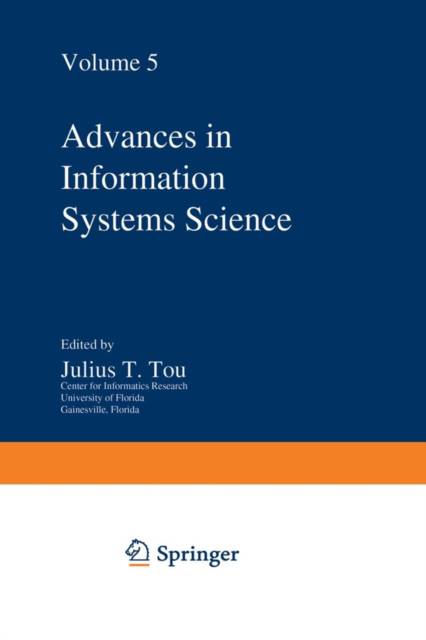
This volume, the fifth of a continuing series on information systems science, covers four timely topics which are in the mainstream of this field. In each chapter, an attempt is made to familiarize the reader with basic background information on the advances discussed, so that this volume may be used independently or in conjunction with the previous volumes. The emphasis in this volume is focused upon data organization and access methods, software for on-line minicomputer applications, advances in micropro- graming, and gramm ars and recognizers for formal and natural languages. In Chapter 1, P. C. Patton presents a tutorial survey of data organiza- tion and access methods which play a central role in information system design. Research in information processing has been shifted from numerical data processing to nonnumerical information handling. In the latter case, the information is carried not only by the data but also by the structure and organization of the data base. In this chapter, the author provides the reader with a comprehensive review of various data structures, including linear lists, array structures, tree structures, and multilinked structures. He also discusses the important problem of data-base design and management. This chapter concludes with several examples of information handling systems such as a matrix interpretive system, a generalized information management system, and a criminal justice information system. The rapid reduction in cost and great increase in capability of the mini- computer have made it an attractive machine for information systems.
Specificaties
Betrokkenen
- Auteur(s):
- Uitgeverij:
Inhoud
- Aantal bladzijden:
- 343
- Taal:
- Engels
Eigenschappen
- Productcode (EAN):
- 9781461582489
- Verschijningsdatum:
- 30/01/2012
- Uitvoering:
- Paperback
- Formaat:
- Trade paperback (VS)
- Afmetingen:
- 152 mm x 229 mm
- Gewicht:
- 480 g



Alleen bij Standaard Boekhandel
+ 213 punten op je klantenkaart van Standaard Boekhandel
CADEAU

AANGERADEN


Beoordelingen
We publiceren alleen reviews die voldoen aan de voorwaarden voor reviews. Bekijk onze voorwaarden voor reviews.