


- Afhalen na 1 uur in een winkel met voorraad
- Gratis thuislevering in België vanaf € 30
- Ruim aanbod met 7 miljoen producten
- Afhalen na 1 uur in een winkel met voorraad
- Gratis thuislevering in België vanaf € 30
- Ruim aanbod met 7 miljoen producten






Adult Guardianship in Europe: A Human Rights and Comparative Perspective
Between Rights and Realities
F. Schuthof
€ 70,00
+ 140 punten
Omschrijving
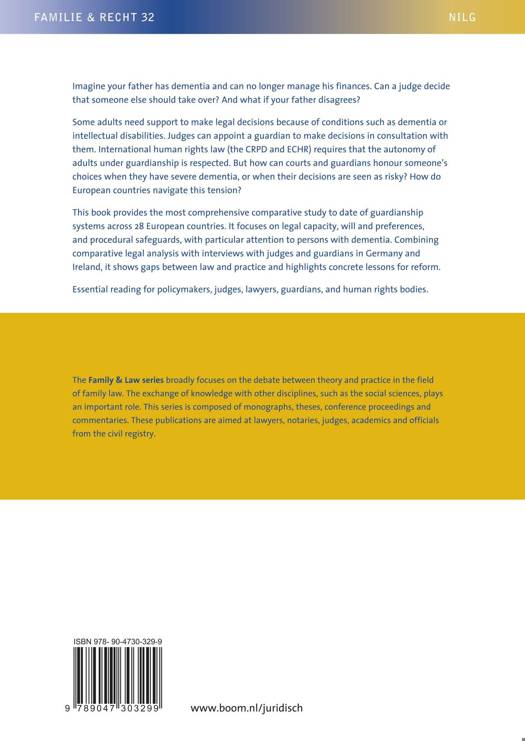
Imagine your father has dementia and can no longer manage his finances. Can a judge decide that someone else should take over? And what if your father disagrees? Some adults need support to make legal decisions because of conditions such as dementia or intellectual disabilities. Judges can appoint a guardian to make decisions in consultation with them. International human rights law (the CRPD and ECHR) requires that the autonomy of adults under guardianship is respected. But how can courts and guardians honour someone’s choices when they have severe dementia, or when their decisions are seen as risky? How do European countries navigate this tension? This book provides the most comprehensive comparative study to date of guardianship systems across 28 European countries. It focuses on legal capacity, will and preferences, and procedural safeguards, with particular attention to persons with dementia. Combining comparative legal analysis with interviews with judges and guardians in Germany and Ireland, it shows gaps between law and practice and highlights concrete lessons for reform. Essential reading for policymakers, judges, lawyers, guardians, and human rights bodies. The Family & Law series broadly focuses on the debate between theory and practice in the field of family law. The exchange of knowledge with other disciplines, such as the social sciences, plays an important role. This series is composed of monographs, theses, conference proceedings and commentaries. These publications are aimed at lawyers, notaries, judges, academics and officials from the civil registry.
Specificaties
Betrokkenen
- Auteur(s):
- Uitgeverij:
Inhoud
- Aantal bladzijden:
- 352
- Taal:
- Engels
- Reeks:
Eigenschappen
- Productcode (EAN):
- 9789047303299
- Verschijningsdatum:
- 30/04/2026
- Uitvoering:
- Paperback
- Afmetingen:
- 170 mm x 240 mm
- Gewicht:
- 598 g



Alleen bij Standaard Boekhandel
+ 140 punten op je klantenkaart van Standaard Boekhandel
Cadeau

AANGERADEN


Beoordelingen
We publiceren alleen reviews die voldoen aan de voorwaarden voor reviews. Bekijk onze voorwaarden voor reviews.