


- Afhalen na 1 uur in een winkel met voorraad
- Gratis thuislevering in België vanaf € 30
- Ruim aanbod met 7 miljoen producten
- Afhalen na 1 uur in een winkel met voorraad
- Gratis thuislevering in België vanaf € 30
- Ruim aanbod met 7 miljoen producten





€ 54,45
+ 108 punten
Omschrijving
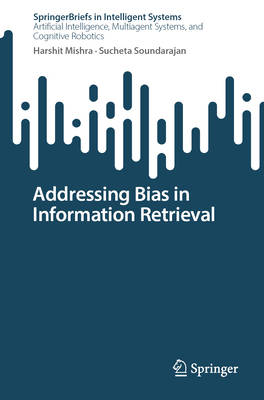
Online search engines are an essential tool for seeking information, but results returned from these search engines can contain undesirable forms of bias with respect to protected attributes such as gender or race. These biases can exist due to the word embeddings used by search engines, the design of re-ranking algorithms, the development of retrieval algorithms, or a variety of other reasons. Classical information retrieval (IR) methods, such as query recommendation or query expansion, were designed to produce the most relevant results. However, if such biases are present in the system, then these methods will also deliver biased results. IR systems/recommender systems also play a major role in social media algorithms, where platforms have pivoted away from friend-follow timelines to "for you" timelines containing algorithmically-selected content. If these algorithms are biased (towards, say, maximizing screen time to show ads, maximizing user interaction to likes, comments), then they may push end users towards clickbait or non-mainstream trending topics. This book presents an overview of modern IR and discusses the work done to mitigate biases in IR systems. It also examines methods for debiasing word embeddings and re-ranking search results to address group fairness, and presents a query reformulation method that analyzes bias in search results and delivers balanced results to the end user. Awareness of how information retrieval systems work, ways to mitigate bias in search results, and the tradeoffs between accuracy and bias metrics in search results will help readers understand real-world search engines.
Specificaties
Betrokkenen
- Auteur(s):
- Uitgeverij:
Inhoud
- Aantal bladzijden:
- 79
- Taal:
- Engels
- Reeks:
Eigenschappen
- Productcode (EAN):
- 9783032241443
- Verschijningsdatum:
- 28/06/2026
- Uitvoering:
- Paperback
- Formaat:
- Trade paperback (VS)
- Afmetingen:
- 155 mm x 235 mm


Alleen bij Standaard Boekhandel
+ 108 punten op je klantenkaart van Standaard Boekhandel
Cadeau

AANGERADEN


Beoordelingen
We publiceren alleen reviews die voldoen aan de voorwaarden voor reviews. Bekijk onze voorwaarden voor reviews.