


- Afhalen na 1 uur in een winkel met voorraad
- Gratis thuislevering in België vanaf € 30
- Ruim aanbod met 7 miljoen producten
- Afhalen na 1 uur in een winkel met voorraad
- Gratis thuislevering in België vanaf € 30
- Ruim aanbod met 7 miljoen producten





€ 201,45
+ 402 punten
Omschrijving
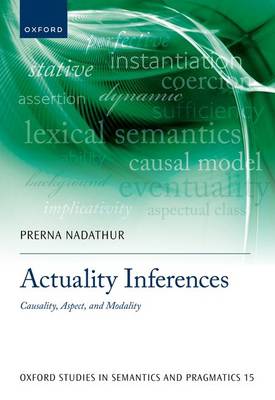
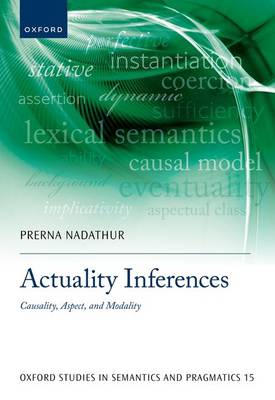
This book investigates the phenomenon of actuality inferences, in which claims of ability are-in certain temporal contexts-interpreted as descriptions of actual events, instead of as descriptions of potentialities or possibilities. Although actuality inferences evidently arise in the interaction between modality and aspect, they have long resisted compositional explication in standard treatments of these semantic categories. Prerna Nadathur here pursues a new approach, in which actuality inferences are linked to a novel component in the semantics of ability: causal dependence relations. The account is developed through a comparative, crosslinguistic semantic analysis of three predicate classes that license similar inferences: implicative verbs in Finnish and English, enough/too predicates in French and English, and (modal) ability predicates in French, Hindi, and English. Similarities in the inferential profiles of these predicates are tied to their shared causal background structure, while their differences-including in sensitivity to grammatical aspect-derive from differences in asserted content and associated aspectual class contrasts. The central argument is that a complex causal structure for ability interacts with the compositional requirements of aspect to derive the observed actuality-ability ambiguity. The volume shows that causal structure and causal relationships shape patterns of linguistic inference beyond the overtly causal domain, and thus contributes to a new and growing body of research in which formal, computational causal models are employed as an analytic tool for lexical and compositional semantics.
Specificaties
Betrokkenen
- Auteur(s):
- Uitgeverij:
Inhoud
- Aantal bladzijden:
- 312
- Taal:
- Engels
- Reeks:
Eigenschappen
- Productcode (EAN):
- 9780192849885
- Verschijningsdatum:
- 27/06/2023
- Uitvoering:
- Hardcover
- Formaat:
- Genaaid
- Afmetingen:
- 175 mm x 234 mm
- Gewicht:
- 725 g


Alleen bij Standaard Boekhandel
+ 402 punten op je klantenkaart van Standaard Boekhandel
Cadeau

AANGERADEN


Beoordelingen
We publiceren alleen reviews die voldoen aan de voorwaarden voor reviews. Bekijk onze voorwaarden voor reviews.