


- Afhalen na 1 uur in een winkel met voorraad
- Gratis thuislevering in België vanaf € 30
- Ruim aanbod met 7 miljoen producten
- Afhalen na 1 uur in een winkel met voorraad
- Gratis thuislevering in België vanaf € 30
- Ruim aanbod met 7 miljoen producten





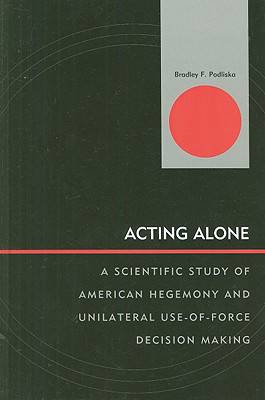
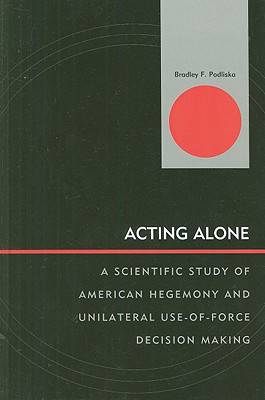
Acting Alone
A Scientific Study of American Hegemony and Unilateral Use-of-Force Decision Making
Bradley F Podliska
€ 254,45
+ 508 punten
Omschrijving
Acting Alone: A Scientific Study of American Hegemony and Unilateral Use-of-Force Decision Making is a straight-forward analysis of unilateral U.S. military actions, which are dependent upon the power disparity between the U.S. and the rest of the world. In solving the puzzle as to why individual presidents have made the 'wrong' decision to act alone, the author lays out a president's behavior, during a crisis, as a two-step decision process. Acting Alone reviews the well-studied first decision, deciding to use force, based on international conflict literature and organized along traditional lines. The author then details the second decision, deciding to use unilateral force, with an explanation of the criticisms of multilateralism and the reasons for unilateralism. To test a new theory of unilateral use of force decision making, Acting Alone devises a definition and coding rules for unilateral use of force, develops a sequential model of presidential use of force decision making, and constructs a new, alternative measure of military power, a Composite Indicator of Military Revolutions (CIMR). It then uses three methods - a statistical test with a heckman probit model, an experiment, and case studies - to test U.S. crisis behavior since 1937. By applying these three methods, the author finds that presidents are realists and make expected utility calculations to act unilaterally or multilaterally after their decision to use force. The unilateral decision, in particular, positively correlates with a wide military gap with an opponent, an opponent located in the Western hemisphere, and a national security threat.
Specificaties
Betrokkenen
- Auteur(s):
- Uitgeverij:
Inhoud
- Aantal bladzijden:
- 272
- Taal:
- Engels
- Reeks:
Eigenschappen
- Productcode (EAN):
- 9780739142516
- Verschijningsdatum:
- 15/02/2010
- Uitvoering:
- Hardcover
- Formaat:
- Ongenaaid / garenloos gebonden
- Afmetingen:
- 155 mm x 229 mm
- Gewicht:
- 544 g


Alleen bij Standaard Boekhandel
+ 508 punten op je klantenkaart van Standaard Boekhandel
Cadeau

AANGERADEN


Beoordelingen
We publiceren alleen reviews die voldoen aan de voorwaarden voor reviews. Bekijk onze voorwaarden voor reviews.