


- Afhalen na 1 uur in een winkel met voorraad
- Gratis thuislevering in België vanaf € 30
- Ruim aanbod met 7 miljoen producten
- Afhalen na 1 uur in een winkel met voorraad
- Gratis thuislevering in België vanaf € 30
- Ruim aanbod met 7 miljoen producten





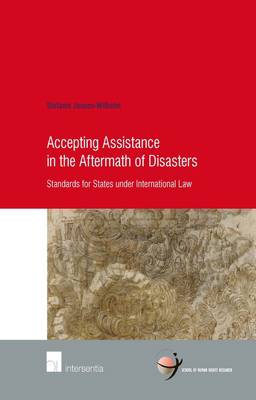
Accepting Assistance in the Aftermath of Disasters
Standards for States Under International Law Volume 69
Stefanie Jansen-Wilhelm
€ 71,00
+ 142 punten
Omschrijving
Disasters have a devastating effect on the lives of people. The occurrence of a disaster can kill thousands in an instance, injure many others, damage homes and destroy livelihoods. It is of essential importance that the response to a disaster is as effective and adequate as possible to limit and alleviate the suffering of disaster survivors. To this end, affected states can make use of offers of humanitarian assistance made by other states, international (humanitarian) organisations and NGOs. Such international assistance is vital for the effective response to a disaster when the affected state is unable (or unwilling) to respond adequately. When in such cases the affected state refuses to accept international humanitarian assistance, the disaster survivors suffer the consequences.Within public international law there are no legally binding instruments dealing explicitly with the obligations of states in the aftermath of disasters. Rather, a variety of sources can be used as pieces of a puzzle determining to what extent states have an obligation to accept international humanitarian assistance in disaster settings. In the first part of this book, these pieces of the puzzle are put together to create a legal framework explaining the steps an affected state must take in seeking and accepting humanitarian assistance. It becomes clear from the application of this framework that detail is lacking to make the framework of practical use. The needs which disaster survivors are usually deprived of (shelter, food, water and access to basic healthcare) are laid down as human rights in the International Covenant of Economic, Social and Cultural Rights. The second part of the book will use this human rights instrument to concretise the legal framework, as such setting standards determining when an affected state must accept international humanitarian assistance in the aftermath of a disaster.
Specificaties
Betrokkenen
- Auteur(s):
- Uitgeverij:
Inhoud
- Aantal bladzijden:
- 246
- Taal:
- Engels
- Reeks:
- Reeksnummer:
- nr. 69
Eigenschappen
- Productcode (EAN):
- 9781780683294
- Verschijningsdatum:
- 1/06/2015
- Uitvoering:
- Paperback
- Formaat:
- Trade paperback (VS)
- Afmetingen:
- 170 mm x 240 mm
- Gewicht:
- 485 g


Alleen bij Standaard Boekhandel
+ 142 punten op je klantenkaart van Standaard Boekhandel
Cadeau

AANGERADEN


Beoordelingen
We publiceren alleen reviews die voldoen aan de voorwaarden voor reviews. Bekijk onze voorwaarden voor reviews.