


- Afhalen na 1 uur in een winkel met voorraad
- Gratis thuislevering in België vanaf € 30
- Ruim aanbod met 7 miljoen producten
- Afhalen na 1 uur in een winkel met voorraad
- Gratis thuislevering in België vanaf € 30
- Ruim aanbod met 7 miljoen producten





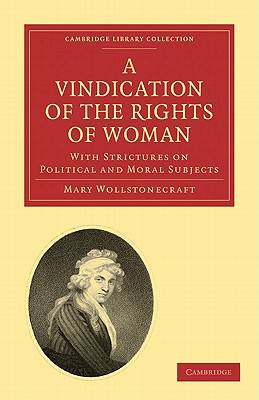
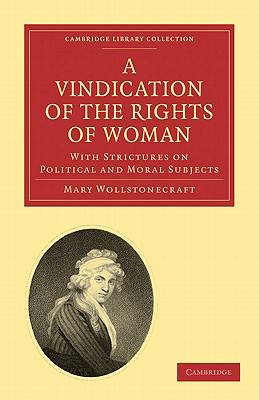
A Vindication of the Rights of Woman
With Strictures on Political and Moral Subjects
Mary Wollstonecraft
€ 112,95
+ 225 punten
Uitvoering
Omschrijving
Mary Wollstonecraft (1759-1797) published A Vindication of the Rights of Woman in 1792. It was written in reaction to Rousseau's Emile (1762), which argued that the purpose of a girl's education was to make her useful to a man. Wollstonecraft offered a defence of woman's ability to reason, given appropriate education. She argued that the limited education given to women made them docile and empty-headed playthings whose supposed fragility and coquetry were constructions that damaged not only the individual but society as a whole. Her radical prescription was for girls to be educated alongside boys and to the same standard, so that they were not left dependent on marriage for financial security. The independence of mind displayed in this polemic has ensured its place as a foundational work in the canon of feminist thought. For more information on this author, see http: //orlando.cambridge.org/public/svPeople?person_id=wollma
Specificaties
Betrokkenen
- Auteur(s):
- Uitgeverij:
Inhoud
- Aantal bladzijden:
- 478
- Taal:
- Engels
- Reeks:
Eigenschappen
- Productcode (EAN):
- 9781108018852
- Verschijningsdatum:
- 28/10/2010
- Uitvoering:
- Paperback
- Formaat:
- Trade paperback (VS)
- Afmetingen:
- 140 mm x 216 mm
- Gewicht:
- 603 g


Alleen bij Standaard Boekhandel
+ 225 punten op je klantenkaart van Standaard Boekhandel
Cadeau

AANGERADEN


Beoordelingen
We publiceren alleen reviews die voldoen aan de voorwaarden voor reviews. Bekijk onze voorwaarden voor reviews.