


- Afhalen na 1 uur in een winkel met voorraad
- Gratis thuislevering in België vanaf € 30
- Ruim aanbod met 7 miljoen producten
- Afhalen na 1 uur in een winkel met voorraad
- Gratis thuislevering in België vanaf € 30
- Ruim aanbod met 7 miljoen producten





€ 169,95
+ 339 punten
Omschrijving
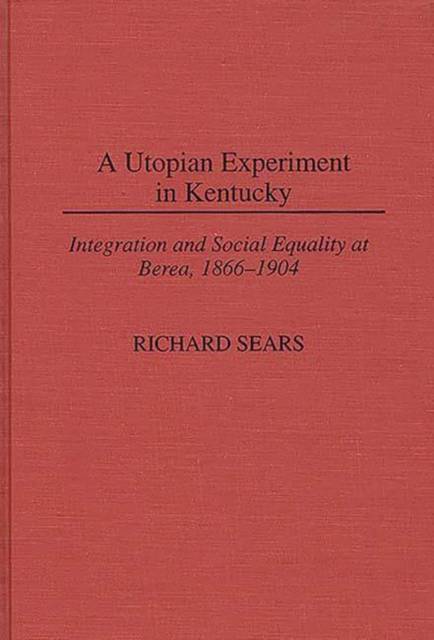
A major social and educational experiment in race relations was conducted in Berea, Kentucky, from 1866 to 1904. During those years Berea contained a community, school, and church which were all fully integrated: white people, mostly from the Kentucky Appalachian region, and black people, former slaves and their children, from the Blue Grass country, lived, worked, and studied together in an atmosphere designed to foster social equality. Sears demonstrates that integration and social equality among the races are not unrealizable ideals; at Berea in the second half of the 19th century these ideals were lived out in practical terms. The Berea project was killed by state and federal legislation, not by being intrinsically unworkable.
Specificaties
Betrokkenen
- Auteur(s):
- Uitgeverij:
Inhoud
- Aantal bladzijden:
- 272
- Taal:
- Engels
- Reeks:
Eigenschappen
- Productcode (EAN):
- 9780313300400
- Verschijningsdatum:
- 23/08/1996
- Uitvoering:
- Hardcover
- Formaat:
- Genaaid
- Afmetingen:
- 156 mm x 234 mm
- Gewicht:
- 548 g


Alleen bij Standaard Boekhandel
+ 339 punten op je klantenkaart van Standaard Boekhandel
Cadeau

AANGERADEN


Beoordelingen
We publiceren alleen reviews die voldoen aan de voorwaarden voor reviews. Bekijk onze voorwaarden voor reviews.