


- Afhalen na 1 uur in een winkel met voorraad
- Gratis thuislevering in België vanaf € 30
- Ruim aanbod met 7 miljoen producten
- Afhalen na 1 uur in een winkel met voorraad
- Gratis thuislevering in België vanaf € 30
- Ruim aanbod met 7 miljoen producten





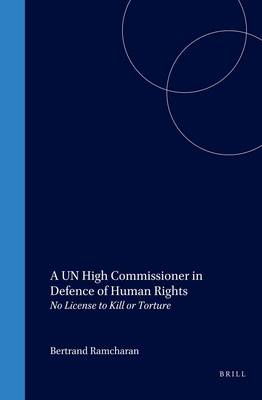
A Un High Commissioner in Defence of Human Rights
No License to Kill or Torture
Bertie G Ramcharan
Hardcover | Engels
€ 275,24
+ 550 punten
Omschrijving
In contemporary international relations the United Nations High Commissioner for Human Rights is a central actor, promoting human rights laws and institutions within countries, speaking out against gross violations of human rights, integrating human rights into efforts for conflict prevention, peacemaking, peacekeeping, peacebuilding, development and humanitarian affairs.
The author exercised the functions of UN High Commissioner for Human Rights in a turbulent period involving the conflict in Iraq, the conflict in Cote d'Ivoire, and the crisis in Darfur, Sudan. In this unique work he tells the story of the role of the High Commissioner in leadership and advocacy, crisis response, diplomatic initiatives, mainstreaming human rights, and strengthening the Office of High Commissioner. The texts of the principal reports referred to the essays contained in Part One are reproduced in Part Two, offering the reader important insights into the reasoning, the methods and the techniques used in the work of the High Commissioner. This is the first book ever written by a serving High Commissioner in the history of the institution. It is obligatory reading for all students and practitioners of human rights.
The author exercised the functions of UN High Commissioner for Human Rights in a turbulent period involving the conflict in Iraq, the conflict in Cote d'Ivoire, and the crisis in Darfur, Sudan. In this unique work he tells the story of the role of the High Commissioner in leadership and advocacy, crisis response, diplomatic initiatives, mainstreaming human rights, and strengthening the Office of High Commissioner. The texts of the principal reports referred to the essays contained in Part One are reproduced in Part Two, offering the reader important insights into the reasoning, the methods and the techniques used in the work of the High Commissioner. This is the first book ever written by a serving High Commissioner in the history of the institution. It is obligatory reading for all students and practitioners of human rights.
Specificaties
Betrokkenen
- Auteur(s):
- Uitgeverij:
Inhoud
- Aantal bladzijden:
- 868
- Taal:
- Engels
Eigenschappen
- Productcode (EAN):
- 9789004142985
- Verschijningsdatum:
- 23/11/2004
- Uitvoering:
- Hardcover
- Formaat:
- Genaaid
- Afmetingen:
- 168 mm x 245 mm
- Gewicht:
- 1669 g


Alleen bij Standaard Boekhandel
+ 550 punten op je klantenkaart van Standaard Boekhandel
Cadeau

AANGERADEN


Beoordelingen
We publiceren alleen reviews die voldoen aan de voorwaarden voor reviews. Bekijk onze voorwaarden voor reviews.