


- Afhalen na 1 uur in een winkel met voorraad
- Gratis thuislevering in België vanaf € 30
- Ruim aanbod met 7 miljoen producten
- Afhalen na 1 uur in een winkel met voorraad
- Gratis thuislevering in België vanaf € 30
- Ruim aanbod met 7 miljoen producten





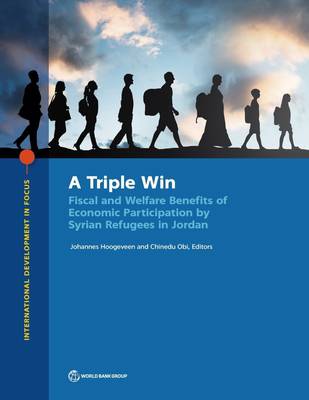
A Triple Win
Fiscal and Welfare Benefits of Economic Participation by Syrian Refugees in Jordan
Johannes Hoogeveen, Chinedu Obi
€ 62,45
+ 124 punten
Omschrijving
A Triple Win: Fiscal and Welfare Benefits of Economic Participation by Syrian Refugees in Jordan is the result of a joint effort by the World Bank and the United Nations High Commissioner for Refugees to explore the welfare of Syrian refugees in Jordan and to review the aid that refugees receive and their participation in the economy. The analysis shows how deprivation among Syrian refugees is elevated, more so for refugees living in host communities. This presents a puzzle because most refugees opt to live outside of the camps, even though they have the option to stay in camps. Why do people voluntarily expose themselves to a higher risk of poverty? The volume finds an answer in the desire of refugees for freedom and autonomy. A Triple Win then turns to humanitarian aid that is found important for reducing refugee poverty, but insufficient as poverty levels remain high. After considering the scope for efficiency gains, the conclusion is that at current levels of aid it will not be possible to lift all Syrian refugees out of poverty unless another solution is found. Increasing the financial autonomy of refugees provides the needed solution. Syrian refugees already access Jordan's labor market, but their access is constrained. Those who work tend to labor in less remunerative jobs, often in the informal sector. Despite this, the incomes earned by refugees exceed aid by a factor of two. The analysis goes on to show that refugee economic participation already reduces the need for aid by US$850 million per year. This reduction could increase if labor market restrictions were eased. The savings that would be generated could then be repurposed. This approach defines the triple win: refugees gain financial autonomy, humanitarian aid is reserved for those most in need, and Jordan receives additional resources to invest in its economic development.
Specificaties
Betrokkenen
- Auteur(s):
- Uitgeverij:
Inhoud
- Aantal bladzijden:
- 172
- Taal:
- Engels
- Reeks:
Eigenschappen
- Productcode (EAN):
- 9781464821073
- Verschijningsdatum:
- 25/07/2024
- Uitvoering:
- Paperback
- Formaat:
- Trade paperback (VS)
- Afmetingen:
- 216 mm x 279 mm
- Gewicht:
- 566 g


Alleen bij Standaard Boekhandel
+ 124 punten op je klantenkaart van Standaard Boekhandel
Cadeau

AANGERADEN


Beoordelingen
We publiceren alleen reviews die voldoen aan de voorwaarden voor reviews. Bekijk onze voorwaarden voor reviews.