


- Afhalen na 1 uur in een winkel met voorraad
- Gratis thuislevering in België vanaf € 30
- Ruim aanbod met 7 miljoen producten
- Afhalen na 1 uur in een winkel met voorraad
- Gratis thuislevering in België vanaf € 30
- Ruim aanbod met 7 miljoen producten





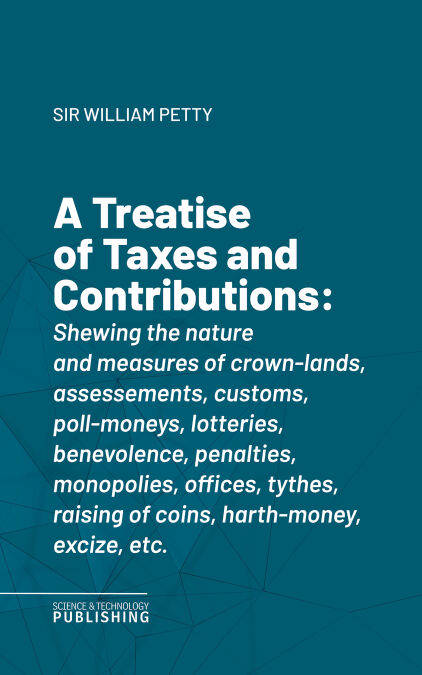
A Treatise of Taxes and Contributions E-BOOK
Shewing the nature and measures of crown-lands, assessements, customs, poll-moneys, lotteries, benevolence, penalties, monopolies, offices, tythes, raising of coins, harth-money, excize, etc.
Petty
E-book | Engels
€ 19,99
+ 19 punten
Omschrijving
A Treatise of Taxes and Contributions, written by Sir William Petty and first published in 1662, is a foundational work in the history of economic thought and public finance. In this comprehensive treatise, Petty systematically examines the various forms of taxation and public revenue in 17th-century England, offering a detailed analysis of their nature, purpose, and effects on society and the economy. The book explores a wide array of fiscal instruments, including crown-lands, assessments, customs, poll-moneys, lotteries, benevolence, penalties, monopolies, offices, tythes, the raising of coins, hearth-money, and excise. Petty discusses the principles behind each method of raising public funds, evaluating their efficiency, fairness, and impact on different social classes. Throughout the treatise, Petty advocates for rational and equitable taxation, emphasizing the importance of minimizing economic distortions and promoting the common good. He introduces innovative concepts such as the natural and political observations of the population and wealth, laying the groundwork for later developments in statistics and political economy. Petty’s clear and logical style, combined with his use of empirical data and practical examples, makes the book both accessible and insightful. A Treatise of Taxes and Contributions is not only a critical historical document but also a work of enduring relevance, as it addresses fundamental questions about the relationship between the state and its citizens, the role of government in economic life, and the principles of just taxation. It remains a key text for students of economics, history, and public policy, offering valuable insights into the origins of modern fiscal systems and the challenges of balancing public needs with private interests.
Specificaties
Betrokkenen
- Auteur(s):
- Uitgeverij:
Inhoud
- Taal:
- Engels
Eigenschappen
- Productcode (EAN):
- 9782528117439
- Verschijningsdatum:
- 31/08/2025
- Uitvoering:
- E-book
- Formaat:
- ePub


Alleen bij Standaard Boekhandel
+ 19 punten op je klantenkaart van Standaard Boekhandel
2+1 GRATIS


Beoordelingen
We publiceren alleen reviews die voldoen aan de voorwaarden voor reviews. Bekijk onze voorwaarden voor reviews.