


- Afhalen na 1 uur in een winkel met voorraad
- Gratis thuislevering in België vanaf € 30
- Ruim aanbod met 7 miljoen producten
- Afhalen na 1 uur in een winkel met voorraad
- Gratis thuislevering in België vanaf € 30
- Ruim aanbod met 7 miljoen producten





€ 22,45
+ 44 punten
Omschrijving
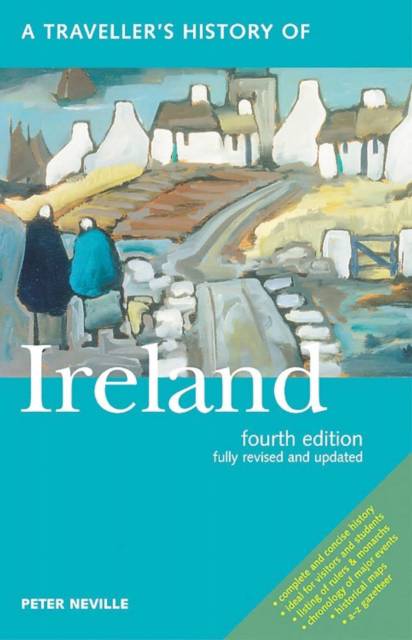
A Traveller's History of Ireland gives a full and accurate portrait of Ireland from its prehistory right up to the present. The story opens with mysterious, early Celtic Ireland where no Roman stood, through Saint Patrick's mission to Ireland which began the process of making it "an island of saints," to the legendary high King Brian Boru and his struggle with Viking and Irish enemies alike. It moves on through the arrival of the Norman "Strongbow" in the twelfth century, and the beginnings of the difficult and tragic Anglo-Irish relationship. Great historical figures like Hugh O'Neill, Oliver Cromwell, and Jonathan Swift figure, as well as ordinary people like the Londonderry "apprentice boys" who helped change the course of Irish history. The book then moves into modern times with the great revolts of 1798, the horrors of the potato famine, and the careers of the leading constitutional nationalists, Daniel O'Connell and Charles Parnell. The book ends with a description of modern Ireland, and of its two separate Catholic Nationalist and Protestant Unionist traditions.
Specificaties
Betrokkenen
- Auteur(s):
- Uitgeverij:
Inhoud
- Aantal bladzijden:
- 286
- Taal:
- Engels
- Reeks:
Eigenschappen
- Productcode (EAN):
- 9781623717988
- Verschijningsdatum:
- 1/11/2022
- Uitvoering:
- Paperback
- Formaat:
- Trade paperback (VS)
- Afmetingen:
- 126 mm x 196 mm
- Gewicht:
- 317 g


Alleen bij Standaard Boekhandel
+ 44 punten op je klantenkaart van Standaard Boekhandel
Cadeau

AANGERADEN


Beoordelingen
We publiceren alleen reviews die voldoen aan de voorwaarden voor reviews. Bekijk onze voorwaarden voor reviews.