


- Afhalen na 1 uur in een winkel met voorraad
- Gratis thuislevering in België vanaf € 30
- Ruim aanbod met 7 miljoen producten
- Afhalen na 1 uur in een winkel met voorraad
- Gratis thuislevering in België vanaf € 30
- Ruim aanbod met 7 miljoen producten





€ 56,54
+ 113 punten
Omschrijving
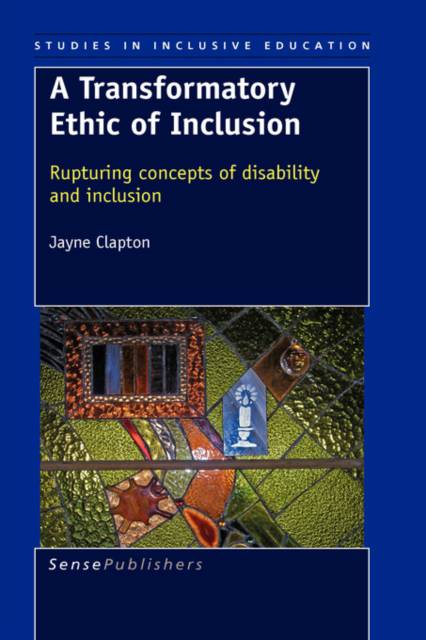
Inclusion, is a topical notion which underpins contemporary human service practices and policies within Western Judeo-Christian societies. Inclusion is most often considered within socio-historical and socio-political contexts, whereby technical and legislative responses are sought. However, this book explores the question, "How ethically defensible is the notion of inclusion in relation to people with intellectual disability?" The book contends that inclusion is a multifaceted, complex concept in a dualistic and dichotomous relationship with exclusion. It is argued that historical and contemporary conceptualisations of exclusion for people with intellectual disability have been constructed from various philosophical and theological matrices imbued with particular values about personhood. Furthermore, it is proposed that the ethical significance of inclusion and exclusion in the context of intellectual disability is defined and perpetuated by expressions of a particular socio-symbolic order underpinned by patriarchy and kyriarchy, and subjected to two controlling ethics - an Ethic of Normalcy and an Ethic of Anomaly. Inclusion and exclusion are conceived as phenomena relating to how membership is defined, legitimated, or repelled by concealed, occluding boundaries acting within a patriarchal socio-ethical fabric. The book argues that Ethical Inclusion is only possible through the rupture of these boundaries by a conceptual tool, 'A Transformatory Ethic of Inclusion'. This conceptual instrument of rupture embraces the scholarship of feminist ethics and feminist theology. Such a rupture requires examining the ways traditional ethical frameworks themselves have conceptually diminished and devalued the authenticity of people with intellectual disability. A concept of integrality becomes imaginable. Conceptual analysis is framed using a crafting metaphor of a patchwork quilt which is infused with narrative; and by which, such an ethical exploration is undertaken, and impaired, traditional ethical theorising is confronted and transformed.
Specificaties
Betrokkenen
- Auteur(s):
- Uitgeverij:
Inhoud
- Aantal bladzijden:
- 348
- Taal:
- Engels
- Reeks:
- Reeksnummer:
- nr. 2
Eigenschappen
- Productcode (EAN):
- 9789087905385
- Verschijningsdatum:
- 1/01/2009
- Uitvoering:
- Paperback
- Formaat:
- Trade paperback (VS)
- Afmetingen:
- 156 mm x 234 mm
- Gewicht:
- 494 g


Alleen bij Standaard Boekhandel
+ 113 punten op je klantenkaart van Standaard Boekhandel
Cadeau

AANGERADEN


Beoordelingen
We publiceren alleen reviews die voldoen aan de voorwaarden voor reviews. Bekijk onze voorwaarden voor reviews.