


- Afhalen na 1 uur in een winkel met voorraad
- Gratis thuislevering in België vanaf € 30
- Ruim aanbod met 7 miljoen producten
- Afhalen na 1 uur in een winkel met voorraad
- Gratis thuislevering in België vanaf € 30
- Ruim aanbod met 7 miljoen producten





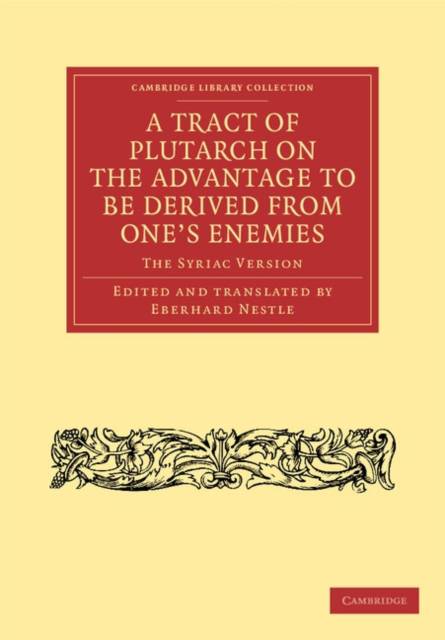
A Tract of Plutarch on the Advantage to Be Derived from One's Enemies (de Capienda Ex Inimicis Utilitate)
The Syriac Version
€ 59,95
+ 119 punten
Omschrijving
Eberhard Nestle (1851-1913) was a German biblical scholar and theologian who studied at the University of Tübingen before teaching in London and across Germany. A talented linguist and textual critic, he published a grammar of Syriac and several editions of ancient manuscripts including the New Testament in Greek. This work, originally published in 1894 as part of the Studia Sinaitica series, is the text in Syriac of a treatise by Plutarch on human virtue found in a manuscript in the library of the Monastery of St Catherine on Mount Sinai. Nestle believed the text dated from the late sixth century and suggested that it was translated into Syriac from Greek by a Christian scholar who adapted it for a Christian audience. This text will be of great interest both to Syriac scholars and to those interested in the comparison of Greek philosophy and Christian theology.
Specificaties
Betrokkenen
- Vertaler(s):
- Uitgeverij:
Inhoud
- Aantal bladzijden:
- 54
- Taal:
- Engels
- Reeks:
Eigenschappen
- Productcode (EAN):
- 9781108043175
- Verschijningsdatum:
- 28/06/2012
- Uitvoering:
- Paperback
- Formaat:
- Trade paperback (VS)
- Afmetingen:
- 170 mm x 244 mm
- Gewicht:
- 99 g

Alleen bij Standaard Boekhandel
+ 119 punten op je klantenkaart van Standaard Boekhandel
Cadeau

AANGERADEN


Beoordelingen
We publiceren alleen reviews die voldoen aan de voorwaarden voor reviews. Bekijk onze voorwaarden voor reviews.