


- Afhalen na 1 uur in een winkel met voorraad
- Gratis thuislevering in België vanaf € 30
- Ruim aanbod met 7 miljoen producten
- Afhalen na 1 uur in een winkel met voorraad
- Gratis thuislevering in België vanaf € 30
- Ruim aanbod met 7 miljoen producten





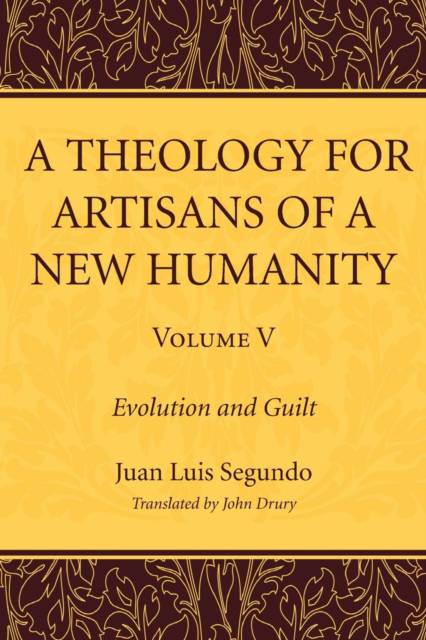
A Theology for Artisans of a New Humanity, Volume 5
Juan L Sj Segundo
€ 31,95
+ 63 punten
Omschrijving
A THEOLOGY FOR ARTISANS OF A NEW HUMANITY Volume 1 The Community Called Church Volume 2 Grace and the Human Condition Volume 3 Our Idea of God Volume 4 The Sacraments Today Volume 5 Evolution and Guilt For many generations Christians have considered sin almost exclusively in terms of the individual person: ""my sins"" and ""your sins."" These sins, moreover, have been thought to have their roots in our ""fallen human nature,"" the consequence of original sin. Recently, however, the bishops and theologians of Latin America have begun to speak of ""sinful structures,"" ""sinful institutions,"" and even ""sinful societies."" These terms sound rather strange to North American ears, but an understanding of them is vital if Christians here are to live up to their calling to be both prophetic and creative agents for change within their communities-global as well as national. These communities are scarred by sinful structures and sinful institutions, if we but had the eyes to see them as they are. For the love taught and lived by Christ has ""a creative obligation,"" in Segundo's phrase: the obligation to move evolution forward into ever more truly human forms and structures. ""I have come to give life, and that more abundantly."" Segundo's reflections on the nature and meaning of that life make Evolution and Guilt a signal contribution to pastoral as well as political theology. It is paramount, however, a breakthrough in Christian moral theology, speaking to the major issues of our times.
Specificaties
Betrokkenen
- Auteur(s):
- Vertaler(s):
- Uitgeverij:
Inhoud
- Aantal bladzijden:
- 154
- Taal:
- Engels
- Reeks:
- Reeksnummer:
- nr. 5
Eigenschappen
- Productcode (EAN):
- 9781610974646
- Verschijningsdatum:
- 13/05/2011
- Uitvoering:
- Paperback
- Formaat:
- Trade paperback (VS)
- Afmetingen:
- 152 mm x 226 mm
- Gewicht:
- 226 g



Alleen bij Standaard Boekhandel
+ 63 punten op je klantenkaart van Standaard Boekhandel
Cadeau

AANGERADEN


Beoordelingen
We publiceren alleen reviews die voldoen aan de voorwaarden voor reviews. Bekijk onze voorwaarden voor reviews.