


- Afhalen na 1 uur in een winkel met voorraad
- Gratis thuislevering in België vanaf € 30
- Ruim aanbod met 7 miljoen producten
- Afhalen na 1 uur in een winkel met voorraad
- Gratis thuislevering in België vanaf € 30
- Ruim aanbod met 7 miljoen producten





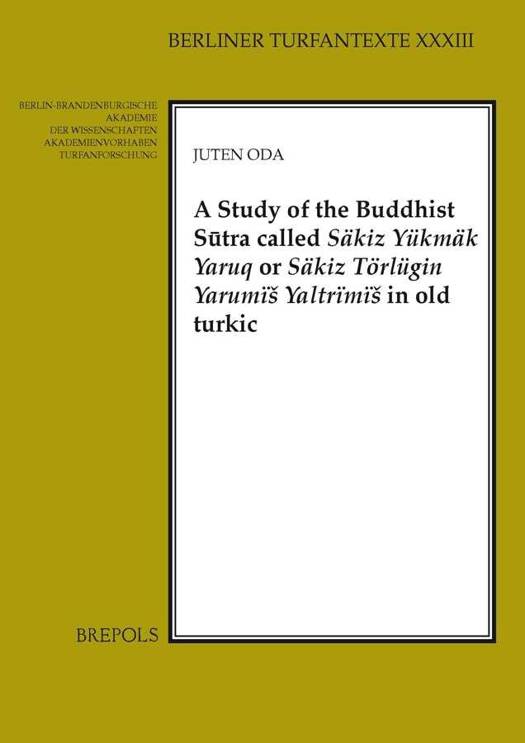
A Study of the Buddhist Sūtra called Säkiz Yükmäk Yaruq or Säkiz Törlügin Yarumïš Yaltrïmïš in Old Turkic
Juten Oda
€ 100,70
+ 201 punten
Omschrijving
This study of a scripture translated into Old Turkic from the apocryphal Chinese Bayangjing contains the reconstruction of the Old Turkic text and a comparison of the reconstructed text with the extant original Chinese text, as well as the Tibetan and Mongolian translations. Judging from the quantitative and linguistic abundance of extant Turkic fragments and their rich content, there can be little doubt that this scripture circulated widely and over a long period of time among Uighur Buddhists from the 10th century onwards. In a collection of Buddhist essays (in China dating from 1155), there are some three thousand copies of the fabricated Bayangjing. This was probably a reference to the popularity of scriptures such as the fabricated (i.e. apocryphal) Bayangjing which was not included in the official canon because it did not go back to an Indian original but was composed in China. Despite its apocryphal nature, it should also be noted that the Bayangjing includes scathing criticism of the yin-yang theory and undue concern for good and bad fortune. Furthermore, according to a review, it may be a Buddhist gospel of liberation from taboos and divination. The reconstructed text is provided in a critical edition, and the volume contains variae lectiones, an English translation, the text of the Chinese original (with English translation), together with notes on Buddhist terminology and Old Turkic terms, a complete comparative table of the texts, a bibliography, an index of Old Turkic words and suffixes, and plates of one of the Chinese originals.
Specificaties
Betrokkenen
- Auteur(s):
- Uitgeverij:
Inhoud
- Aantal bladzijden:
- 319
- Taal:
- Frans
- Reeks:
- Reeksnummer:
- nr. 33
Eigenschappen
- Productcode (EAN):
- 9782503565408
- Verschijningsdatum:
- 29/10/2015
- Uitvoering:
- Paperback
- Formaat:
- Trade paperback (VS)
- Afmetingen:
- 206 mm x 295 mm
- Gewicht:
- 1156 g


Alleen bij Standaard Boekhandel
+ 201 punten op je klantenkaart van Standaard Boekhandel
Cadeau

AANGERADEN


Beoordelingen
We publiceren alleen reviews die voldoen aan de voorwaarden voor reviews. Bekijk onze voorwaarden voor reviews.