



Bedankt voor het vertrouwen het afgelopen jaar! Om jou te bedanken bieden we GRATIS verzending (in België) aan op alles gedurende de hele maand januari.
- Afhalen na 1 uur in een winkel met voorraad
- Gratis thuislevering in België vanaf € 30
- Ruim aanbod met 7 miljoen producten
Bedankt voor het vertrouwen het afgelopen jaar! Om jou te bedanken bieden we GRATIS verzending (in België) aan op alles gedurende de hele maand januari.
- Afhalen na 1 uur in een winkel met voorraad
- Gratis thuislevering in België vanaf € 30
- Ruim aanbod met 7 miljoen producten





Omschrijving
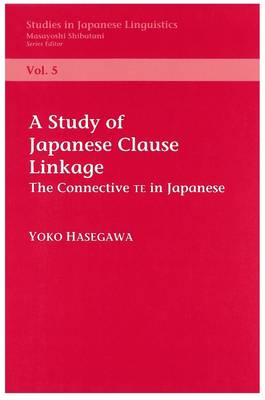
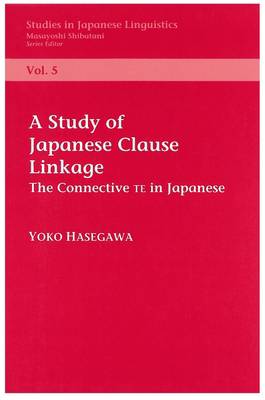
Employing a hybrid theoretical framework of Role and Reference Grammar and Construction Grammar, this volume investigates the syntactic, semantic, and pragmatic properties of the diverse families of Japanese constructions in which the verbal suffix TE (approximately the English 'and') is a linking device. The TE suffix is the most frequent and versatile connective in Japanese, able to link all three types of verbal constituents. Because the semantic relations obtainable between the conjuncts are heterogeneous, the prevailing view is that TE-linkage is a mere syntactic device with no semantic content; and the interpreter must infer intended semantic relations based on extra linguistic knowledge. However, closer examination reveals clear correlations between its syntax and semantics that have been obscured in previous studies which did not investigate TE-constructions as pairings of form and meaning. Detailed analysis of TE-linkage is of special significance to linguistic theory because it inevitably involves the search for an adequate descriptive framework for representing connectives.
Specificaties
Betrokkenen
- Auteur(s):
- Uitgeverij:
Inhoud
- Aantal bladzijden:
- 253
- Taal:
- Engels
- Reeks:
- Reeksnummer:
- nr. 5
Eigenschappen
- Productcode (EAN):
- 9781575860268
- Verschijningsdatum:
- 26/04/1996
- Uitvoering:
- Paperback
- Formaat:
- Trade paperback (VS)
- Afmetingen:
- 152 mm x 229 mm
- Gewicht:
- 353 g


Alleen bij Standaard Boekhandel
+ 84 punten op je klantenkaart van Standaard Boekhandel
CADEAU


Beoordelingen
We publiceren alleen reviews die voldoen aan de voorwaarden voor reviews. Bekijk onze voorwaarden voor reviews.