


- Afhalen na 1 uur in een winkel met voorraad
- Gratis thuislevering in België vanaf € 30
- Ruim aanbod met 7 miljoen producten
- Afhalen na 1 uur in een winkel met voorraad
- Gratis thuislevering in België vanaf € 30
- Ruim aanbod met 7 miljoen producten





Omschrijving
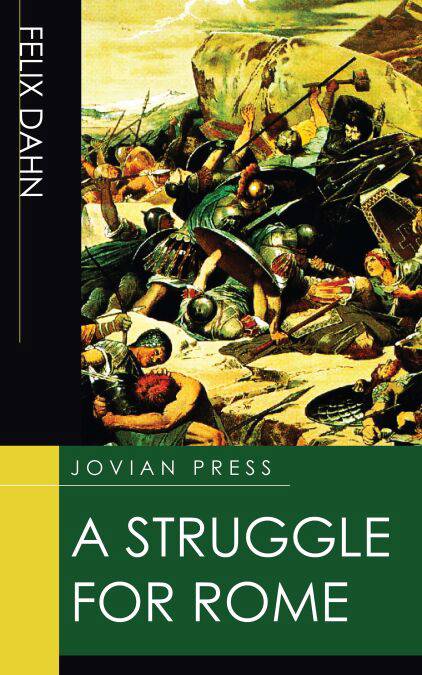
Felix Dahn was a nineteenth century German Professor of Jurisprudence, as well as a historian, novelist and poet, who was greatly admired by his academic contemporaries for his grasp of the historical detail of the periods about which he wrote. He has been well served by this magisterial translation, which at last makes this astonishingly rich novel available to the modern English reader. This is a story - perhaps the story - of the clash between two great civilizations of the sixth century of the Common Era, when the Roman Empire had crumbled into dust; the struggle for Rome, and for Italy, between the Eastern Roman Empire of Byzantium, ruled by Justinian, and the Gothic warrior tribes who had captured Italy under their legendary king Theodoric. We see this epoch through the eyes of different personalities at the centre of these events which shook the world as they knew it; most are historical figures and some are imaginary but typical; Justinian and his beautiful and scheming wife, Theodora; the great commander Belisarius, immortalised by Robert Graves; Totila and Teias, two Gothic kings, one as bold and bright as the sun and the other as black as night; and Cethegus, the Prefect of Rome and the last of the Romans, whose cold and calculating nature runs through the book like a steel thread, who will stop at nothing to regain the ancient city, and who, in the end, fails and redeems his many crimes with a hero's death. Firmly based on historical fact and contemporary sources, A Struggle for Rome is one of the great historical novels of the world.
Specificaties
Betrokkenen
- Auteur(s):
- Uitgeverij:
Inhoud
- Aantal bladzijden:
- 626
- Taal:
- Engels
Eigenschappen
- Productcode (EAN):
- 9781537810706
- Verschijningsdatum:
- 21/11/2017
- Uitvoering:
- E-book
- Formaat:
- ePub



Alleen bij Standaard Boekhandel
Cadeau

AANGERADEN


Beoordelingen
We publiceren alleen reviews die voldoen aan de voorwaarden voor reviews. Bekijk onze voorwaarden voor reviews.