


- Afhalen na 1 uur in een winkel met voorraad
- Gratis thuislevering in België vanaf € 30
- Ruim aanbod met 7 miljoen producten
- Afhalen na 1 uur in een winkel met voorraad
- Gratis thuislevering in België vanaf € 30
- Ruim aanbod met 7 miljoen producten





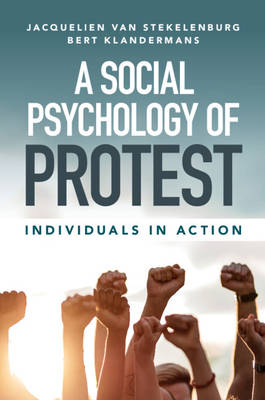
A Social Psychology of Protest
Individuals in Action
Jacquelien Van Stekelenburg, Bert Klandermans
Paperback | Engels
€ 53,45
+ 106 punten
Uitvoering
Omschrijving
Protest is typically rare behavior, yet the first decade of the twenty-first century has been named the era of protest. Successful protests bring masses to the streets, and the emergence of social media has fundamentally changed the process of mobilization. What protests need to be successful is demand (grievances, anger, and indignation), supply (protest organizations), and mobilization (effective communication networks). Motivation to participate can be instrumental, expressive, and identity driven, and politicized collective identity plays an important role in the dynamics of collective action. This volume brings together insights from social psychology, political psychology, sociology, and political science to provide a comprehensive and up-to-date analysis of protest participation, particularly to the question of why some people protest while others do not. It is essential reading for scholars interested in the social and political psychology of individuals in action.
Specificaties
Betrokkenen
- Auteur(s):
- Uitgeverij:
Inhoud
- Aantal bladzijden:
- 292
- Taal:
- Engels
Eigenschappen
- Productcode (EAN):
- 9781316630839
- Verschijningsdatum:
- 7/12/2023
- Uitvoering:
- Paperback
- Formaat:
- Trade paperback (VS)
- Afmetingen:
- 152 mm x 229 mm
- Gewicht:
- 394 g


Alleen bij Standaard Boekhandel
+ 106 punten op je klantenkaart van Standaard Boekhandel
Cadeau

AANGERADEN


Beoordelingen
We publiceren alleen reviews die voldoen aan de voorwaarden voor reviews. Bekijk onze voorwaarden voor reviews.