


- Afhalen na 1 uur in een winkel met voorraad
- Gratis thuislevering in België vanaf € 30
- Ruim aanbod met 7 miljoen producten
- Afhalen na 1 uur in een winkel met voorraad
- Gratis thuislevering in België vanaf € 30
- Ruim aanbod met 7 miljoen producten





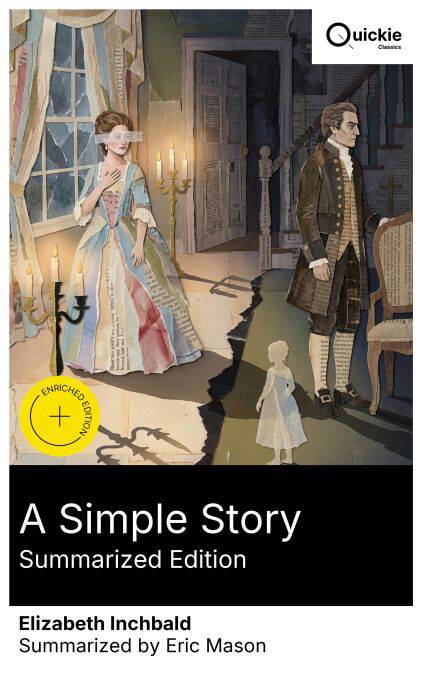
A Simple Story (Summarized Edition) E-BOOK
Enriched edition. A feminist portrait of 18th-century England, where love, identity, and societal expectations collide in a sentimental tale of moral dilemmas.
Elizabeth Inchbald
E-book | Engels
€ 1,99
+ 1 punten
Omschrijving
A Simple Story (1791) unfolds in two parts: the first follows Miss Milner and her guardian, the Catholic priest Dorriforth, whose inheritance releases him from vows and makes him Lord Elmwood; the second, years later, turns to their daughter Matilda facing paternal estrangement and domestic despotism. Inchbald fuses sentimental and Gothic tones with stage economy, crafting scenes of moral suspense and silence. The narrative probes sensibility, female education, religious authority, and paternal law, while its abrupt temporal break exposes the costs of passion turned to power. A celebrated actress and playwright from a Catholic family, Inchbald brought to fiction theatrical timing and greenroom discipline. Her training in role‑playing, coupled with a lifelong negotiation of public voice—she stammered—shapes the novel's attention to speech withheld and feeling performed. Moving in the London milieu of Godwin and Wollstonecraft, wary of polemic, she forged a narrative that tests conduct-book orthodoxy without discarding it. Readers of Richardson, Burney, and Austen will find a taut study of desire, authority, and forgiveness. Scholars of gender, religion, and eighteenth-century form will prize its daring structure and theatrical poise; general readers will discover a story at once intimate and unsparing.
Quickie Classics summarizes timeless works with precision, preserving the author's voice and keeping the prose clear, fast, and readable—distilled, never diluted. Enriched Edition extras: Introduction · Synopsis · Historical Context · Brief Analysis · 4 Reflection Q&As · Editorial Footnotes.
Quickie Classics summarizes timeless works with precision, preserving the author's voice and keeping the prose clear, fast, and readable—distilled, never diluted. Enriched Edition extras: Introduction · Synopsis · Historical Context · Brief Analysis · 4 Reflection Q&As · Editorial Footnotes.
Specificaties
Betrokkenen
- Auteur(s):
- Uitgeverij:
Inhoud
- Aantal bladzijden:
- 97
- Taal:
- Engels
Eigenschappen
- Productcode (EAN):
- 8596547879190
- Verschijningsdatum:
- 9/01/2026
- Uitvoering:
- E-book
- Beveiligd met:
- Digital watermarking
- Formaat:
- ePub


Alleen bij Standaard Boekhandel
+ 1 punten op je klantenkaart van Standaard Boekhandel
CADEAU

AANGERADEN


Beoordelingen
We publiceren alleen reviews die voldoen aan de voorwaarden voor reviews. Bekijk onze voorwaarden voor reviews.