


- Afhalen na 1 uur in een winkel met voorraad
- Gratis thuislevering in België vanaf € 30
- Ruim aanbod met 7 miljoen producten
- Afhalen na 1 uur in een winkel met voorraad
- Gratis thuislevering in België vanaf € 30
- Ruim aanbod met 7 miljoen producten





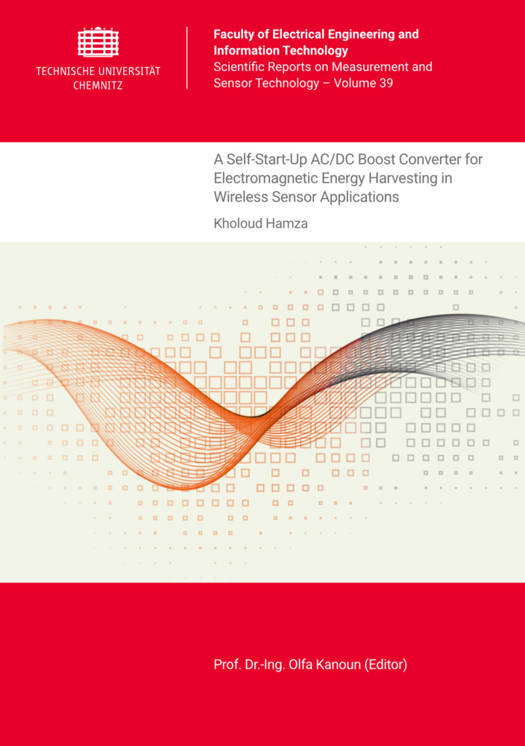
A Self-Start-Up AC/DC Boost Converter for Electromagnetic Energy Harvesting in Wireless Sensor Applications
Kholoud Hamza
€ 22,95
Omschrijving
Electromagnetic energy harvesting-powered wireless sensors must operate with ultra-low power, remain functional under low vibrations, and autonomously restart after long energy interruptions. However, most systems are inefficient, need dedicated start-up and complex gate drivers, often need up to 5 V supply, and rarely report restart time after unpowered phases. This thesis proposes two self-powered AC/DC boost converters that start from zero voltage under ultra-low excitation without dedicated start-up circuits. A passive multi-stage voltage multiplier (VM) is integrated in the rectification stage to fast reach the 1.6 V threshold, while the harvester inductance is used as the boost element. The converters operate in start-up and boost modes using two validated topologies: bidirectional and parallel. Both use a three-stage VM; the bidirectional blocks reverse conduction, while the parallel reduces conduction losses. Boost-mode experiments show efficiency and charging speed strongly depend on switching frequency and duty cycle, with optimal performance at 32 kHz. At 0.22g and 29Hz with a 47mF supercapacitor, the bidirectional converter performs best at 78% duty cycle and the parallel at 68.4%. Both start autonomously from 0.65V and reach 1.6V within 20s. In boost mode, the bidirectional topology delivers 4.16V, 1.2mW, 72% efficiency, while the parallel topology reaches 5V, 1.84mW, and 79.2% efficiency, enabling reliable restart and long-term autonomous wireless sensing.
Specificaties
Betrokkenen
- Auteur(s):
- Uitgeverij:
Inhoud
- Taal:
- Engels
- Reeks:
- Reeksnummer:
- nr. 39
Eigenschappen
- Productcode (EAN):
- 9783961003044
- Uitvoering:
- Paperback
- Afmetingen:
- 148 mm x 10 mm
- Gewicht:
- 311 g


Alleen bij Standaard Boekhandel
Cadeau

AANGERADEN


Beoordelingen
We publiceren alleen reviews die voldoen aan de voorwaarden voor reviews. Bekijk onze voorwaarden voor reviews.