


- Afhalen na 1 uur in een winkel met voorraad
- Gratis thuislevering in België vanaf € 30
- Ruim aanbod met 7 miljoen producten
- Afhalen na 1 uur in een winkel met voorraad
- Gratis thuislevering in België vanaf € 30
- Ruim aanbod met 7 miljoen producten





€ 1,96
+ 1 punten
Uitvoering
Omschrijving
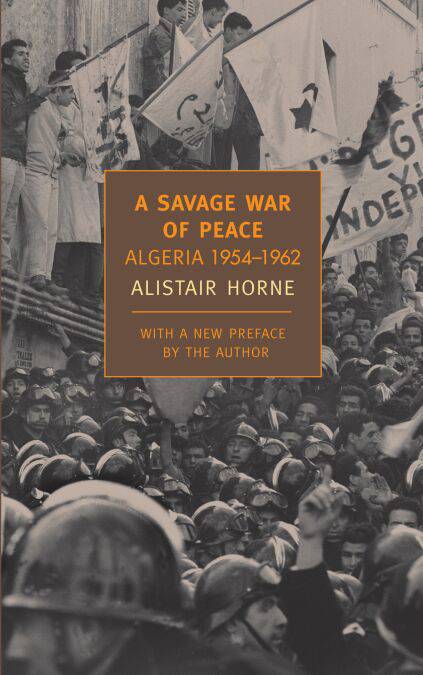
This celebrated history of the Algerian War “captures a contingent moment in the conflict between the West and the Arab world”, reminding us that “modern history is not made by the ‘clash of civilizations’ but by people” (Harper’s Magazine).
“This universally acclaimed history . . . should have been mandatory reading for the civilian and military leaders who opted to invade Iraq.” —The Washington Times
The Algerian War lasted from 1954 to 1962. It brought down six French governments, led to the collapse of the Fourth Republic, returned de Gaulle to power, and came close to provoking a civil war on French soil. More than a million Muslim Algerians died in the conflict and as many European settlers were driven into exile. Above all, the war was marked by an unholy marriage of revolutionary terror and repressive torture.
Nearly a half century has passed since this savagely fought war ended in Algeria’s independence, and yet—as Alistair Horne argues in his new preface to his now-classic work of history—its repercussions continue to be felt not only in Algeria and France, but throughout the world. Indeed from today’s vantage point the Algerian War looks like a full-dress rehearsal for the sort of amorphous struggle that convulsed the Balkans in the 1990s and that now ravages the Middle East, from Beirut to Baghdad—struggles in which questions of religion, nationalism, imperialism, and terrorism take on a new and increasingly lethal intensity.
A Savage War of Peace is the definitive history of the Algerian War, a book that brings that terrible and complicated struggle to life with intelligence, assurance, and unflagging momentum. It is essential reading for our own violent times as well as a lasting monument to the historian’s art.
“This universally acclaimed history . . . should have been mandatory reading for the civilian and military leaders who opted to invade Iraq.” —The Washington Times
The Algerian War lasted from 1954 to 1962. It brought down six French governments, led to the collapse of the Fourth Republic, returned de Gaulle to power, and came close to provoking a civil war on French soil. More than a million Muslim Algerians died in the conflict and as many European settlers were driven into exile. Above all, the war was marked by an unholy marriage of revolutionary terror and repressive torture.
Nearly a half century has passed since this savagely fought war ended in Algeria’s independence, and yet—as Alistair Horne argues in his new preface to his now-classic work of history—its repercussions continue to be felt not only in Algeria and France, but throughout the world. Indeed from today’s vantage point the Algerian War looks like a full-dress rehearsal for the sort of amorphous struggle that convulsed the Balkans in the 1990s and that now ravages the Middle East, from Beirut to Baghdad—struggles in which questions of religion, nationalism, imperialism, and terrorism take on a new and increasingly lethal intensity.
A Savage War of Peace is the definitive history of the Algerian War, a book that brings that terrible and complicated struggle to life with intelligence, assurance, and unflagging momentum. It is essential reading for our own violent times as well as a lasting monument to the historian’s art.
Specificaties
Betrokkenen
- Auteur(s):
- Uitgeverij:
Inhoud
- Aantal bladzijden:
- 624
- Taal:
- Engels
Eigenschappen
- Productcode (EAN):
- 9781590174814
- Verschijningsdatum:
- 28/02/2011
- Uitvoering:
- E-book
- Beveiligd met:
- Adobe DRM
- Formaat:
- ePub


Alleen bij Standaard Boekhandel
+ 1 punten op je klantenkaart van Standaard Boekhandel
Cadeau

AANGERADEN


Beoordelingen
We publiceren alleen reviews die voldoen aan de voorwaarden voor reviews. Bekijk onze voorwaarden voor reviews.