


- Afhalen na 1 uur in een winkel met voorraad
- Gratis thuislevering in België vanaf € 30
- Ruim aanbod met 7 miljoen producten
- Afhalen na 1 uur in een winkel met voorraad
- Gratis thuislevering in België vanaf € 30
- Ruim aanbod met 7 miljoen producten





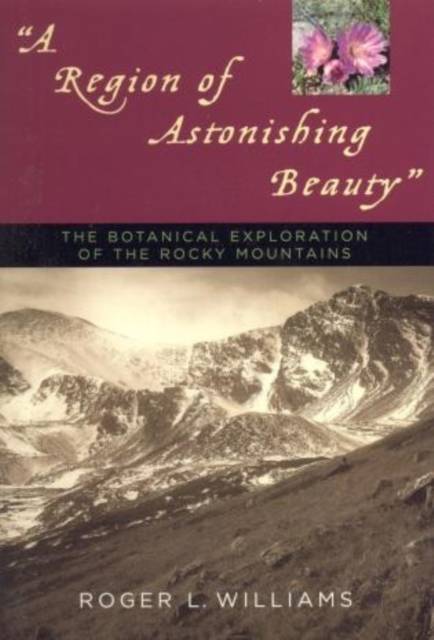
A Region of Astonishing Beauty
The Botanical Exploration of the Rocky Mountains
Roger L Williams
Paperback | Engels
€ 29,95
+ 59 punten
Eenvoudig bestellen
Veilig betalen


Gratis thuislevering vanaf € 30 (via bpost)
Gratis levering in je Standaard Boekhandel
Omschrijving
As we approach the bicentennial of the Lewis and Clark Expedition in 2004, attention will inevitably turn to the nineteenth-century explorers who risked life and limb to interpret the natural history of the American West. Beginning with Meriwether Lewis and his discovery of the bitterroot, the goal of most explorers was not merely to find an adequate route to the Pacific, but also to comment on the state of the region's ecology and its suitability for agriculture, and, of course, to collect plant specimens. In this book, Williams follows the trail of over a dozen explorers who "botanized" the Rocky Mountains, and who, by the end of the nineteenth century, became increasingly convinced that the flora of the American West was distinctive. The sheer wonder of discover, which is not lost on Williams or his subjects, was best captured by botanist Edwin James in 1820 as he emerged above timberline in Colorado to come upon "a region of astonishing beauty."
Specificaties
Betrokkenen
- Auteur(s):
- Uitgeverij:
Inhoud
- Aantal bladzijden:
- 224
- Taal:
- Engels
Eigenschappen
- Productcode (EAN):
- 9781570983979
- Verschijningsdatum:
- 7/05/2003
- Uitvoering:
- Paperback
- Formaat:
- Trade paperback (VS)
- Afmetingen:
- 153 mm x 227 mm
- Gewicht:
- 331 g


Alleen bij Standaard Boekhandel
+ 59 punten op je klantenkaart van Standaard Boekhandel
CADEAU

AANGERADEN


Beoordelingen
We publiceren alleen reviews die voldoen aan de voorwaarden voor reviews. Bekijk onze voorwaarden voor reviews.