


- Afhalen na 1 uur in een winkel met voorraad
- Gratis thuislevering in België vanaf € 30
- Ruim aanbod met 7 miljoen producten
- Afhalen na 1 uur in een winkel met voorraad
- Gratis thuislevering in België vanaf € 30
- Ruim aanbod met 7 miljoen producten




€ 76,45
+ 152 punten
Omschrijving
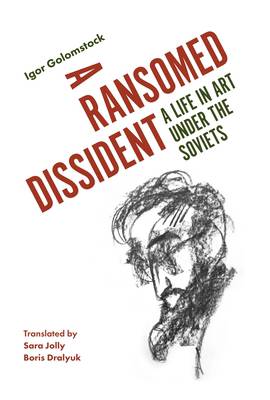
In 1939, a ten-year-old Igor Golomstock accompanied his mother, a medical doctor, to the vast network of labour camps in the Russian Far East. While she tended patients, he was minded by assorted 'trusty' prisoners - hardened criminals - and returned to Moscow an almost feral adolescent, fluent in obscene prison jargon but intellectually ignorant. Despite this dubious start he became a leading art historian and co-author (with his close friend Andrey Sinyavsky) of the first, deeply controversial, monograph on Picasso published in the Soviet Union.
His writings on his 43 years in the Soviet Union offer a rare insight into life as a quietly subversive art historian and the post-Stalin dissident community. In vivid prose Golomstock shows the difficulties of publishing, curating and talking about Western art in Soviet Russia and, with self-deprecating humour, the absurd tragicomedy of life for the Moscow intelligentsia during Khruschev's thaw and Brezhnev's stagnation. He also offers a unique personal perspective on the 1966 trial of Sinyavsky and Yuri Daniel, widely considered the end of Khruschev's liberalism and the spark that ignited the Soviet dissident movement. In 1972 he was given 'permission' to leave the Soviet Union, but only after paying a 'ransom' of more than 25 years' salary, nominally intended to reimburse the state for his education. A remarkable collection of artists, scholars and intellectuals in Russia and the West, including Roland Penrose, came together to help him pay this astronomical sum. His memoirs of life once in the UK offer an insider's view of the BBC Russian Service and a penetrating analysis of the notorious feud between Sinyavsky and Aleksandr Solzhenitsyn. Nominated for the Russian Booker Prize on its publication in Russian in 2014, The Ransomed Dissident opens a window onto the life of a remarkable man: a dissident of uncompromising moral integrity and with an outstanding gift for friendship.Specificaties
Betrokkenen
- Auteur(s):
- Vertaler(s):
- Uitgeverij:
Inhoud
- Aantal bladzijden:
- 288
- Taal:
- Engels
Eigenschappen
- Productcode (EAN):
- 9781350238886
- Verschijningsdatum:
- 25/02/2021
- Uitvoering:
- Paperback
- Formaat:
- Trade paperback (VS)
- Afmetingen:
- 156 mm x 234 mm
- Gewicht:
- 412 g


Alleen bij Standaard Boekhandel
+ 152 punten op je klantenkaart van Standaard Boekhandel
AANGERADEN


Beoordelingen
We publiceren alleen reviews die voldoen aan de voorwaarden voor reviews. Bekijk onze voorwaarden voor reviews.