


- Afhalen na 1 uur in een winkel met voorraad
- Gratis thuislevering in België vanaf € 30
- Ruim aanbod met 7 miljoen producten
- Afhalen na 1 uur in een winkel met voorraad
- Gratis thuislevering in België vanaf € 30
- Ruim aanbod met 7 miljoen producten





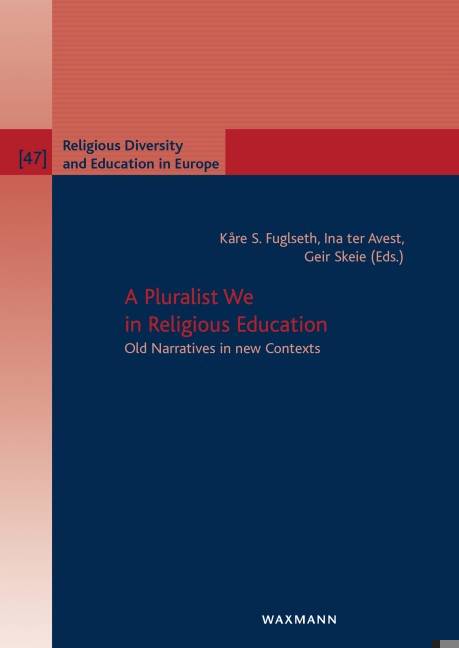
A Pluralist We in Religious Education
Old Narratives in New Contexts
€ 39,45
+ 78 punten
Omschrijving
This volume, A Pluralist We in Religious Education: Old Narratives in New Contexts, is the result of a conference held at Nord University, Bodø, Norway, by a group of scholars (ENRECA) focusing on religious and value education, particularly religious plurality and diversity in Europe. The publication explores the complex issue of religious identity formation in the 21st century, addressing the intersectional nature of identity through different narratives. The contributions in this volume address issues of contextualisation by discussing how narratives of different kinds can be part of educational processes. Contexts in general are difficult to grasp and to deal with theoretically without examples. Even in research, where narratives and their different interpretations are central, there is often a need for exemplification in case studies. The use and study of narratives for specific pedagogical, political and ethical purposes are manifold, as this volume shows. The volume includes discussions on the educational challenges of a multi-religious Europe, interreligious dialogue, and perspectives from different religious traditions, including contributions from South African and Turkish/Muslim scholars.
Specificaties
Betrokkenen
- Uitgeverij:
Inhoud
- Taal:
- Engels
- Reeks:
- Reeksnummer:
- nr. 47
Eigenschappen
- Productcode (EAN):
- 9783818800499
- Uitvoering:
- Paperback
- Afmetingen:
- 170 mm x 10 mm
- Gewicht:
- 465 g

Alleen bij Standaard Boekhandel
+ 78 punten op je klantenkaart van Standaard Boekhandel
AANGERADEN


Beoordelingen
We publiceren alleen reviews die voldoen aan de voorwaarden voor reviews. Bekijk onze voorwaarden voor reviews.