


- Afhalen na 1 uur in een winkel met voorraad
- Gratis thuislevering in België vanaf € 30
- Ruim aanbod met 7 miljoen producten
- Afhalen na 1 uur in een winkel met voorraad
- Gratis thuislevering in België vanaf € 30
- Ruim aanbod met 7 miljoen producten





Omschrijving
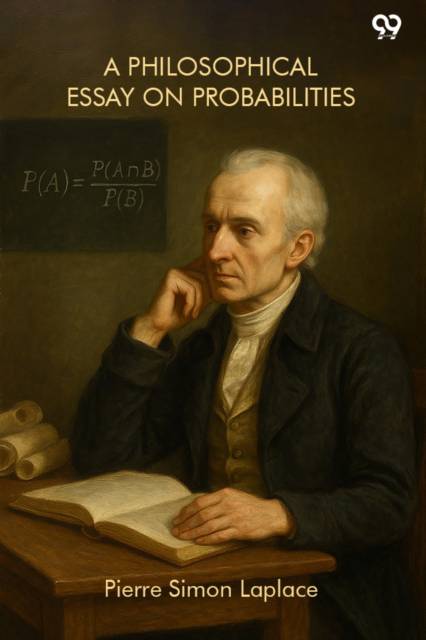
A philosophical essay on probabilities begins by establishing that much of what is considered human knowledge rests on the principles of probability rather than certainty. The essay presents a structured investigation into the nature and utility of probability, showing how it extends beyond games of chance into fields such as astronomy, jurisprudence, and social behavior. It emphasizes that probability emerges from ignorance of true causes and that rational decisions should be based on the best available data and inference. The early sections consider how prior beliefs influence our understanding and how probability serves as a bridge between ignorance and reasonable expectation. By tracing the evolution of the concept from superstition to science, the work affirms that what was once deemed chance can often be calculated, interpreted, and applied with mathematical rigor. The writing examines the philosophical implications of uncertainty and advocates for the application of probabilistic reasoning as a key method for approaching reality, whether through empirical study or moral judgment. Through this lens, the work outlines a vision where probability becomes a central tool in shaping knowledge, expectations, and action.
Specificaties
Betrokkenen
- Auteur(s):
- Uitgeverij:
Inhoud
- Aantal bladzijden:
- 124
- Taal:
- Engels
Eigenschappen
- Productcode (EAN):
- 9789371463898
- Verschijningsdatum:
- 1/06/2025
- Uitvoering:
- Paperback
- Formaat:
- Trade paperback (VS)
- Afmetingen:
- 140 mm x 216 mm
- Gewicht:
- 154 g



Alleen bij Standaard Boekhandel
+ 44 punten op je klantenkaart van Standaard Boekhandel
AANGERADEN


Beoordelingen
We publiceren alleen reviews die voldoen aan de voorwaarden voor reviews. Bekijk onze voorwaarden voor reviews.