


- Afhalen na 1 uur in een winkel met voorraad
- Gratis thuislevering in België vanaf € 30
- Ruim aanbod met 7 miljoen producten
- Afhalen na 1 uur in een winkel met voorraad
- Gratis thuislevering in België vanaf € 30
- Ruim aanbod met 7 miljoen producten





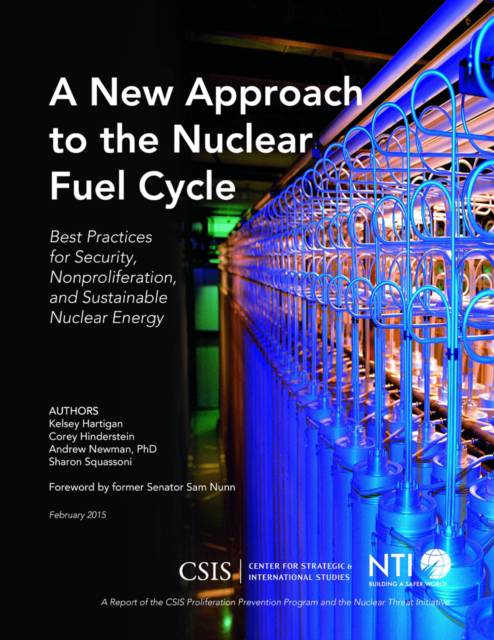
A New Approach to the Nuclear Fuel Cycle
Best Practices for Security, Nonproliferation, and Sustainable Nuclear Energy
Kelsey Hartigan, Corey Hinderstein, Andrew Newman, Sharon Squassoni
€ 115,45
+ 230 punten
Omschrijving
The Nuclear Threat Initiative and the Center for Strategic and International Studies joined to launch the New Approaches to the Fuel Cycle project. This project sought to build consensus on common goals, address practical challenges, and engage a spectrum of actors that influence policymaking regarding the nuclear fuel cycle. The project also tackled one of the toughest issues--spent nuclear fuel and high level waste--to see if solutions there might offer incentives to states on the front end of the nuclear fuel cycle and address the inherent inertia and concerns about additional burdens and restrictions that have stalled past efforts to improve the robustness of the nonproliferation regime. This report presents the group's conclusions that a best-practices approach to the nuclear fuel cycle can achieve these objectives and offer a path to a more secure and sustainable nuclear landscape.
Specificaties
Betrokkenen
- Auteur(s):
- Uitgeverij:
Inhoud
- Aantal bladzijden:
- 80
- Taal:
- Engels
- Reeks:
Eigenschappen
- Productcode (EAN):
- 9781442240537
- Verschijningsdatum:
- 23/02/2015
- Uitvoering:
- Paperback
- Formaat:
- Trade paperback (VS)
- Afmetingen:
- 211 mm x 274 mm
- Gewicht:
- 249 g


Alleen bij Standaard Boekhandel
+ 230 punten op je klantenkaart van Standaard Boekhandel
Cadeau

AANGERADEN


Beoordelingen
We publiceren alleen reviews die voldoen aan de voorwaarden voor reviews. Bekijk onze voorwaarden voor reviews.