


- Afhalen na 1 uur in een winkel met voorraad
- Gratis thuislevering in België vanaf € 30
- Ruim aanbod met 7 miljoen producten
- Afhalen na 1 uur in een winkel met voorraad
- Gratis thuislevering in België vanaf € 30
- Ruim aanbod met 7 miljoen producten





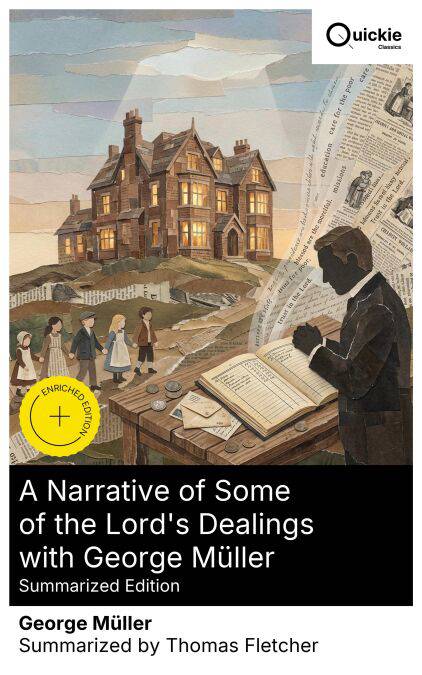
A Narrative of Some of the Lord's Dealings with George Müller (Summarized Edition) E-BOOK
Enriched edition. A Faith-Based Memoir of 19th-Century Philanthropy, Orphan Care, and Divine Provision
George Müller
E-book | Engels
€ 0,49
Omschrijving
This complete four-volume Narrative assembles George Müller's dated journals, letters, and balance sheets into a continuous testimony of providence, from the founding of the Scriptural Knowledge Institution and the Ashley Down orphan houses to his later missionary travels. Written in a plain, ledger-like style that interleaves petitions, precise sums, and recorded answers to prayer, it stands at once within Protestant spiritual autobiography and as a singular document of Victorian evangelical philanthropy. Each crisis and deliverance is traced with Scripture, making the work both devotional and documentary, a practical theology of care. Born in Prussia in 1805 and converted among Pietists at Halle, Müller absorbed A. H. Francke's orphan-house model before resettling in England and joining the Brethren. With Henry Craik he founded the Scriptural Knowledge Institution to distribute Bibles, educate the poor, and support missions. His refusal to incur debt or solicit funds sprang from pastoral scruple and apologetic design: to demonstrate, before church and skeptic alike, the sufficiency of God's provision. Students of religion, social historians, nonprofit leaders, and reflective readers will find this edition indispensable: a primary source on nineteenth-century philanthropy and a bracing manual of trust. Read slowly; its candor instructs, and its audacity provokes.
Quickie Classics summarizes timeless works with precision, preserving the author's voice and keeping the prose clear, fast, and readable—distilled, never diluted. Enriched Edition extras: Introduction · Synopsis · Historical Context · Brief Analysis · 4 Reflection Q&As · Editorial Footnotes.
Quickie Classics summarizes timeless works with precision, preserving the author's voice and keeping the prose clear, fast, and readable—distilled, never diluted. Enriched Edition extras: Introduction · Synopsis · Historical Context · Brief Analysis · 4 Reflection Q&As · Editorial Footnotes.
Specificaties
Betrokkenen
- Auteur(s):
- Uitgeverij:
Inhoud
- Aantal bladzijden:
- 311
- Taal:
- Engels
Eigenschappen
- Productcode (EAN):
- 8596547884149
- Verschijningsdatum:
- 9/01/2026
- Uitvoering:
- E-book
- Beveiligd met:
- Digital watermarking
- Formaat:
- ePub



Alleen bij Standaard Boekhandel
AANGERADEN


Beoordelingen
We publiceren alleen reviews die voldoen aan de voorwaarden voor reviews. Bekijk onze voorwaarden voor reviews.