


- Afhalen na 1 uur in een winkel met voorraad
- Gratis thuislevering in België vanaf € 30
- Ruim aanbod met 7 miljoen producten
- Afhalen na 1 uur in een winkel met voorraad
- Gratis thuislevering in België vanaf € 30
- Ruim aanbod met 7 miljoen producten





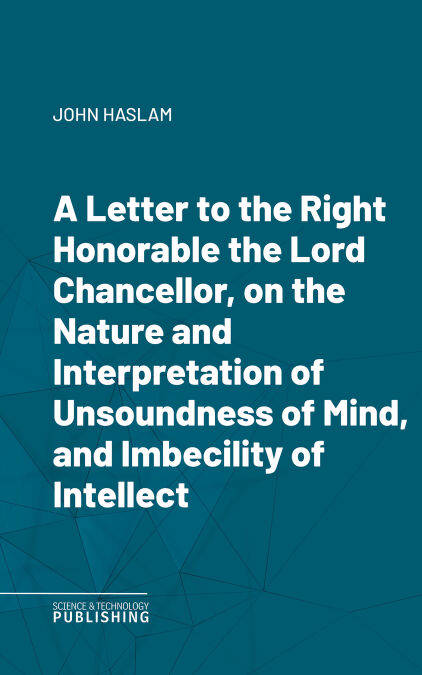
A Letter to the Right Honorable the Lord Chancellor, on the Nature and Interpretation of Unsoundness of Mind, and Imbecility of Intellect E-BOOK
John Haslam
E-book | Engels
€ 19,99
+ 19 punten
Omschrijving
A Letter to the Right Honorable the Lord Chancellor, on the Nature and Interpretation of Unsoundness of Mind, and Imbecility of Intellect is a seminal 19th-century treatise authored by John Haslam, a distinguished physician and apothecary of Bethlehem Hospital, renowned for his expertise in mental health. Published in 1823, this work addresses the Lord Chancellor, the highest judicial authority in England, and delves deeply into the legal and medical complexities surrounding the concepts of unsoundness of mind and imbecility of intellect. Haslam meticulously examines the definitions, causes, and manifestations of mental incapacity, drawing upon his extensive clinical experience and contemporary case studies to illustrate the challenges faced by both the legal and medical professions in determining mental competence. The book critiques the prevailing legal standards and practices for assessing mental unsoundness, highlighting the ambiguities and inconsistencies that often arise in court proceedings, particularly in cases involving inheritance, guardianship, and personal liberty. Haslam advocates for a more nuanced and scientifically informed approach to the interpretation of mental disorders, emphasizing the importance of distinguishing between temporary disturbances and chronic conditions, as well as between intellectual deficiency and emotional instability. He also explores the social and ethical implications of labeling individuals as insane or imbecile, warning against the dangers of misdiagnosis and the potential for abuse of power. Rich in historical context and medical insight, A Letter to the Right Honorable the Lord Chancellor offers a compelling argument for reform in the intersection of law and psychiatry. It stands as an important contribution to the early development of forensic psychiatry and the humane treatment of individuals with mental illness, reflecting the evolving attitudes of the period toward mental health, personal rights, and social responsibility.
Specificaties
Betrokkenen
- Auteur(s):
- Uitgeverij:
Inhoud
- Taal:
- Engels
Eigenschappen
- Productcode (EAN):
- 9782528105207
- Verschijningsdatum:
- 31/08/2025
- Uitvoering:
- E-book
- Formaat:
- ePub


Alleen bij Standaard Boekhandel
+ 19 punten op je klantenkaart van Standaard Boekhandel
Cadeau

AANGERADEN


Beoordelingen
We publiceren alleen reviews die voldoen aan de voorwaarden voor reviews. Bekijk onze voorwaarden voor reviews.