


- Afhalen na 1 uur in een winkel met voorraad
- Gratis thuislevering in België vanaf € 30
- Ruim aanbod met 7 miljoen producten
- Afhalen na 1 uur in een winkel met voorraad
- Gratis thuislevering in België vanaf € 30
- Ruim aanbod met 7 miljoen producten





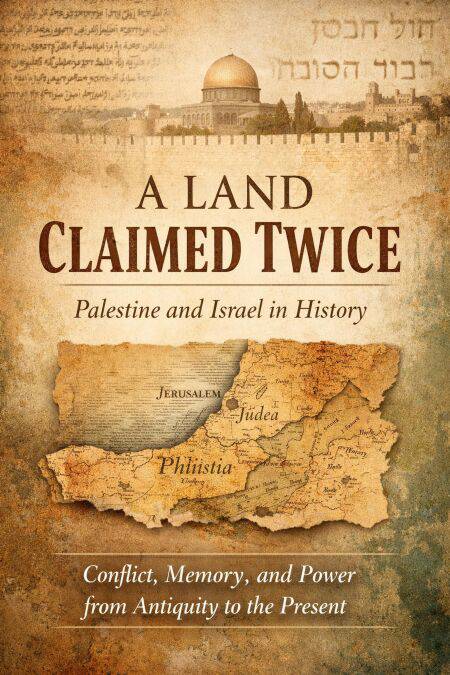
A Land Claimed Twice: Palestine and Israel in History. Conflict, Memory, and Power from Antiquity to the Present E-BOOK
Ivo Vichev
E-book | Engels
€ 8,99
+ 8 punten
Omschrijving
A Land Claimed Twice: Palestine and Israel in History
Conflict, Memory, and Power from Antiquity to the Present
This book offers a sweeping, deeply researched history of one of the world's most enduring and contested conflicts. From ancient empires to modern nation-states, A Land Claimed Twice traces how Palestine and Israel became bound together by faith, conquest, displacement, nationalism, and competing visions of justice.
Rather than beginning in 1948, this history reaches back to antiquity, exploring how successive empires—Assyrian, Persian, Roman, Byzantine, Islamic, Ottoman, and European—shaped the land and its peoples. It examines how sacred narratives, imperial administration, and demographic change laid foundations that would later be mobilized by modern nationalism. By situating the conflict within a long historical arc, the book challenges the idea that today's crisis emerged suddenly or can be understood through a single moment alone.
The modern chapters explore the rise of Zionism, the collapse of the Ottoman Empire, British rule, and the catastrophic rupture of 1948 that Palestinians remember as the Nakba and Israelis remember as independence. The book follows the evolution of Israeli statehood and Palestinian dispossession through war, occupation, resistance, diplomacy, and international intervention. Particular attention is given to the lived consequences of political decisions—refugeehood, settlement expansion, military rule, and the fragmentation of Palestinian society.
Later chapters examine the wars of 1967 and 1973, the rise of the Palestinian national movement, the First and Second Intifadas, the Oslo process and its collapse, the transformation of Gaza under blockade, and the repeated cycles of violence that defined the early twenty-first century. These events are not treated as isolated episodes but as interconnected outcomes of structural power imbalances, failed diplomacy, and unresolved historical trauma.
Throughout, the book foregrounds memory as a political force. Competing narratives of victimhood, survival, and legitimacy are shown to shape policy, identity, and international alignment. Israeli fears rooted in the Holocaust and regional hostility are examined alongside Palestinian experiences of displacement, military occupation, and statelessness. Neither narrative is dismissed; both are critically analyzed.
Written in a clear, narrative style grounded in historical scholarship, A Land Claimed Twice avoids slogans and simplifications. It does not seek to assign moral absolutes but to explain how power operates, why peace efforts repeatedly faltered, and how human lives have been shaped by decisions made far beyond their control.
This is a book for readers seeking understanding rather than affirmation—students, general history readers, and anyone trying to make sense of a conflict that continues to shape global politics. It argues that peace requires more than negotiations and treaties; it demands historical reckoning, recognition of competing memories, and an honest confrontation with the structures that sustain injustice.
History does not end on the final page. It continues—in the streets of Jerusalem, the camps of the diaspora, the walls and borders that divide communities, and the voices of a new generation searching for dignity, security, and belonging. A Land Claimed Twice offers the context needed to understand not only how the conflict began, but why it remains unresolved—and why its future still matters to the world.
Specificaties
Betrokkenen
- Auteur(s):
- Uitgeverij:
Inhoud
- Taal:
- Engels
Eigenschappen
- Productcode (EAN):
- 9798233249303
- Verschijningsdatum:
- 20/12/2025
- Uitvoering:
- E-book
- Formaat:
- ePub


Alleen bij Standaard Boekhandel
+ 8 punten op je klantenkaart van Standaard Boekhandel
Cadeau

AANGERADEN


Beoordelingen
We publiceren alleen reviews die voldoen aan de voorwaarden voor reviews. Bekijk onze voorwaarden voor reviews.