



Bedankt voor het vertrouwen het afgelopen jaar! Om jou te bedanken bieden we GRATIS verzending (in België) aan op alles gedurende de hele maand januari.
- Afhalen na 1 uur in een winkel met voorraad
- In januari gratis thuislevering in België
- Ruim aanbod met 7 miljoen producten
Bedankt voor het vertrouwen het afgelopen jaar! Om jou te bedanken bieden we GRATIS verzending (in België) aan op alles gedurende de hele maand januari.
- Afhalen na 1 uur in een winkel met voorraad
- In januari gratis thuislevering in België
- Ruim aanbod met 7 miljoen producten





€ 21,95
+ 43 punten
Uitvoering
Omschrijving
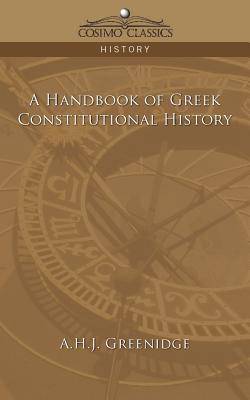
The democratic principle in its extreme form is the assertation that the mere fact of free birth is alone sufficient to constitute a claim to all offices. It is never the claim of a majority to rule, but it is the demand that every one, whether rich or poor, high- or low-born, shall be equally represented in the constitution. This is what Aristotle calls the principle of numerical equality. -from "Chapter VI: Democracy" One of the most renowned classical scholars of the turn of the 20th century here offers a lucid and highly readable overview of a difficult and little understood aspect of Greek history: its public law, not just how it was structured but how it behaved in action. This 1896 book-perfect for university students, amateur historians, and readers of the history of the law-covers the full range of Greek legal development, from the origin of the city-state and the beginnings of the Greek monarchy to the social and political institutions of the far-flung Greek civilization to the rise of federalism and its long-term historical impact on the cultures that came after. British classical scholar A.H.J. GREENIDGE was a lecturer in ancient history at Brasenose College, Oxford. He is also the author of Roman Public and Private Law (1894), Legal Procedure in Cicero's Time (1901), and Roman Public Life (1901), among many other works of ancient history.
Specificaties
Betrokkenen
- Auteur(s):
- Uitgeverij:
Inhoud
- Aantal bladzijden:
- 296
- Taal:
- Engels
Eigenschappen
- Productcode (EAN):
- 9781596055957
- Verschijningsdatum:
- 1/12/2005
- Uitvoering:
- Paperback
- Formaat:
- Trade paperback (VS)
- Afmetingen:
- 127 mm x 203 mm
- Gewicht:
- 322 g


Alleen bij Standaard Boekhandel
+ 43 punten op je klantenkaart van Standaard Boekhandel
SOLDEN


Beoordelingen
We publiceren alleen reviews die voldoen aan de voorwaarden voor reviews. Bekijk onze voorwaarden voor reviews.