



- Afhalen na 1 uur in een winkel met voorraad
- In januari gratis thuislevering in België
- Ruim aanbod met 7 miljoen producten
- Afhalen na 1 uur in een winkel met voorraad
- In januari gratis thuislevering in België
- Ruim aanbod met 7 miljoen producten





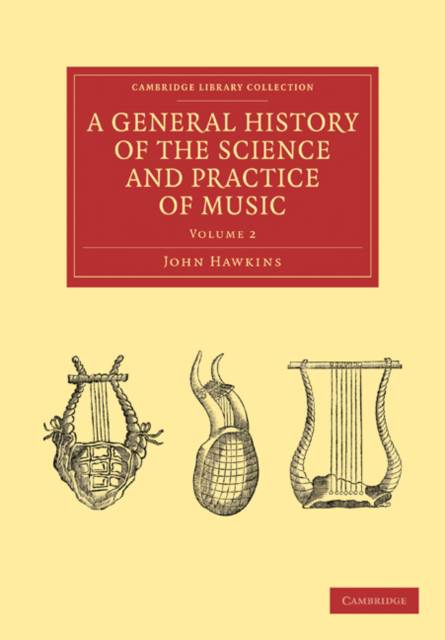
A General History of the Science and Practice of Music - Volume 2
John a Hawkins
€ 101,95
+ 203 punten
Omschrijving
Sir John Hawkins (1719-1789), lawyer, friend of Samuel Johnson and member of the Academy of Ancient Music, published his pioneering five-volume history in 1776 just after the first volume of Burney's. Hawkins' work suffered badly in the resulting competition between the two, partly because of his difficult personality, partly because of the scholarly style of the writing contrasting with Burney's more engaging approach. However, it is Hawkins' accuracy and attention to detail, his appreciation of sixteenth- and seventeenth-century music and his account of London music society in the early eighteenth century, supported by his painstaking research, which makes the History of indispensable value to music scholars. Whilst there are neither contents list nor chapter headings, there is an index, and each volume includes generous illustrations and musical examples. Volume 2 includes music of the troubadours, measured notation, modes, organum, the rise of polyphony and Glarean's Dodecachordon.
Specificaties
Betrokkenen
- Auteur(s):
- Uitgeverij:
Inhoud
- Aantal bladzijden:
- 554
- Taal:
- Engels
- Reeks:
Eigenschappen
- Productcode (EAN):
- 9781108029940
- Verschijningsdatum:
- 30/06/2011
- Uitvoering:
- Paperback
- Formaat:
- Trade paperback (VS)
- Afmetingen:
- 170 mm x 244 mm
- Gewicht:
- 870 g



Alleen bij Standaard Boekhandel
+ 203 punten op je klantenkaart van Standaard Boekhandel
Cadeau

AANGERADEN


Beoordelingen
We publiceren alleen reviews die voldoen aan de voorwaarden voor reviews. Bekijk onze voorwaarden voor reviews.