


- Afhalen na 1 uur in een winkel met voorraad
- Gratis thuislevering in België vanaf € 30
- Ruim aanbod met 7 miljoen producten
- Afhalen na 1 uur in een winkel met voorraad
- Gratis thuislevering in België vanaf € 30
- Ruim aanbod met 7 miljoen producten




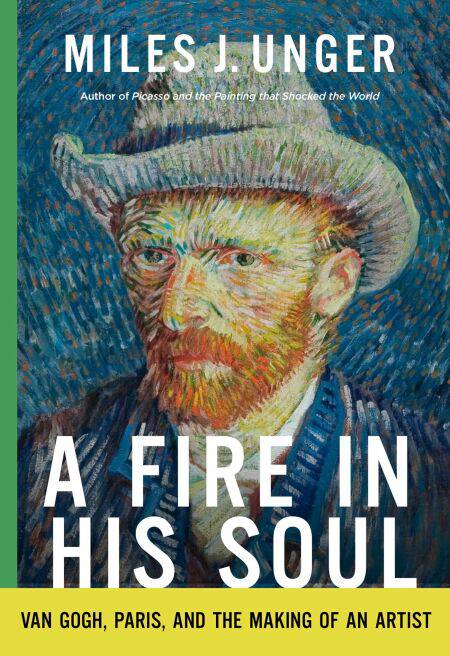
A Fire in His Soul E-BOOK
Van Gogh, Paris, and the Making of an Artist
Miles J. Unger
E-book | Engels
€ 25,71
+ 25 punten
Uitvoering
Omschrijving
The fascinating story of Vincent van Gogh’s two groundbreaking years in Paris, where he transformed himself from a provincial unknown into one of the world’s great visionary artists.
Vincent Van Gogh arrived in the French capital on the last day of February 1886, a month short of his thirty-third birthday. He was a man beaten down by life, half-starved, and nearly broken psychologically. He was saved by his brother Theo, who provided him with room, board, and, most crucially, emotional support while he attempted to master the difficult craft of painting. Thus far, Vincent's crude scenes of peasant life rendered in murky shades of brown and gray were both hackneyed and amateurish. Theo, a successful art dealer at a prestigious Parisian firm, dismissed them as gloomy, unappealing, and, worst of all, unmarketable.
By the time Vincent left Paris, almost exactly two years later, he’d transformed himself into one of the most original artists of the age, turning out works of hallucinatory intensity in vivid hues and stamped with his own distinctive personality. A Fire in His Soul chronicles this remarkable transformation. It’s a tale filled with tragedy and triumph, personal anguish and creative fulfillment, as Vincent, through sheer force of will, reinvents himself as a painter of unparalleled expressive power.
Along the way, the reader will discover an unfamiliar Van Gogh: not the solitary genius of the popular imagination, shunned by an uncomprehending world and conjuring masterpieces from the depths of his lonely soul. In Paris, he was at the center of a community of like-minded seekers. Here, Van Gogh was able to engage in a lively dialogue with fellow artists almost as daring as he was, expanding his notion of what art could and should be.
It was in the cafes and studios of Montmartre and in the grand galleries of the Louvre and Luxembourg, that Van Gogh received his artistic education—a crash course that at first disoriented him but ultimately sparked his creative breakthrough. Working alongside such legendary figures as Gauguin, Toulouse-Lautrec, Seurat, and Signac, he found his voice and launched an artistic revolution.
Vincent Van Gogh arrived in the French capital on the last day of February 1886, a month short of his thirty-third birthday. He was a man beaten down by life, half-starved, and nearly broken psychologically. He was saved by his brother Theo, who provided him with room, board, and, most crucially, emotional support while he attempted to master the difficult craft of painting. Thus far, Vincent's crude scenes of peasant life rendered in murky shades of brown and gray were both hackneyed and amateurish. Theo, a successful art dealer at a prestigious Parisian firm, dismissed them as gloomy, unappealing, and, worst of all, unmarketable.
By the time Vincent left Paris, almost exactly two years later, he’d transformed himself into one of the most original artists of the age, turning out works of hallucinatory intensity in vivid hues and stamped with his own distinctive personality. A Fire in His Soul chronicles this remarkable transformation. It’s a tale filled with tragedy and triumph, personal anguish and creative fulfillment, as Vincent, through sheer force of will, reinvents himself as a painter of unparalleled expressive power.
Along the way, the reader will discover an unfamiliar Van Gogh: not the solitary genius of the popular imagination, shunned by an uncomprehending world and conjuring masterpieces from the depths of his lonely soul. In Paris, he was at the center of a community of like-minded seekers. Here, Van Gogh was able to engage in a lively dialogue with fellow artists almost as daring as he was, expanding his notion of what art could and should be.
It was in the cafes and studios of Montmartre and in the grand galleries of the Louvre and Luxembourg, that Van Gogh received his artistic education—a crash course that at first disoriented him but ultimately sparked his creative breakthrough. Working alongside such legendary figures as Gauguin, Toulouse-Lautrec, Seurat, and Signac, he found his voice and launched an artistic revolution.
Specificaties
Betrokkenen
- Auteur(s):
- Uitgeverij:
Inhoud
- Aantal bladzijden:
- 576
- Taal:
- Engels
Eigenschappen
- Productcode (EAN):
- 9781639368464
- Verschijningsdatum:
- 3/03/2025
- Uitvoering:
- E-book
- Beveiligd met:
- Adobe DRM
- Formaat:
- ePub


Alleen bij Standaard Boekhandel
+ 25 punten op je klantenkaart van Standaard Boekhandel
AANGERADEN


Beoordelingen
We publiceren alleen reviews die voldoen aan de voorwaarden voor reviews. Bekijk onze voorwaarden voor reviews.