


- Afhalen na 1 uur in een winkel met voorraad
- Gratis thuislevering in België vanaf € 30
- Ruim aanbod met 7 miljoen producten
- Afhalen na 1 uur in een winkel met voorraad
- Gratis thuislevering in België vanaf € 30
- Ruim aanbod met 7 miljoen producten





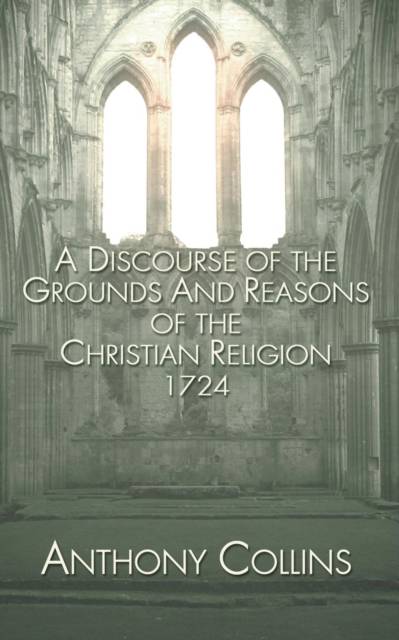
A Discourse of the Grounds and Reasons of the Christian Religion 1724
Anthony Collins
Paperback | Engels
€ 54,45
+ 108 punten
Omschrijving
Collins' 'Discourse of the Grounds and Reasons of the Christian Religion' was at the center of controversies between early eighteenth-century English Deists and their orthodox Christian opponents. In 1722 William Whiston, while defending the old confessional position, admitted that most citations of the Old Testament in the New go well beyond the literal sense when they appealed to prophecies fulfilled by Jesus Christ. Whiston attempted to solve this problem by blaming it on Jews who had amended the original text of the Old Testament. In this volume Collins uses Whiston's proposal as a foil. While Collins could easily make a mockery of Whiston's suggestion that Jews amended the text, he seized upon Whiston's concession that the New Testament consistently depends upon nonliteral interpretations in appeals to messianic fulfillment. Collins points out that if New Testament writers depended upon nonliteral interpretations, then their interpretative techniques contradicted the classical Christian norm of the literal sense as the only basis for arguments about doctrine and failed to make any compelling historical case for prophetic doctrine. In other words, if Old Testament prophecy is allegorical in nature, then it can't be used to furnish any real truth of an event. This volume proved to be quite controversial, calling forth no less than thirty-five replies in two years.
Specificaties
Betrokkenen
- Auteur(s):
- Uitgeverij:
Inhoud
- Aantal bladzijden:
- 334
- Taal:
- Engels
Eigenschappen
- Productcode (EAN):
- 9781597520676
- Verschijningsdatum:
- 26/01/2005
- Uitvoering:
- Paperback
- Formaat:
- Trade paperback (VS)
- Afmetingen:
- 139 mm x 203 mm
- Gewicht:
- 371 g



Alleen bij Standaard Boekhandel
+ 108 punten op je klantenkaart van Standaard Boekhandel
Cadeau

AANGERADEN


Beoordelingen
We publiceren alleen reviews die voldoen aan de voorwaarden voor reviews. Bekijk onze voorwaarden voor reviews.