


- Afhalen na 1 uur in een winkel met voorraad
- Gratis thuislevering in België vanaf € 30
- Ruim aanbod met 7 miljoen producten
- Afhalen na 1 uur in een winkel met voorraad
- Gratis thuislevering in België vanaf € 30
- Ruim aanbod met 7 miljoen producten





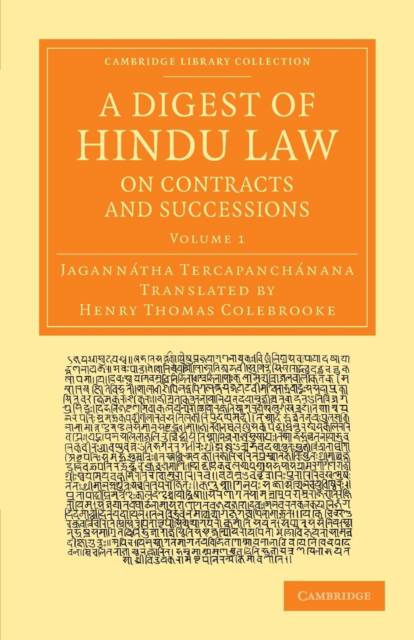
A Digest of Hindu Law, on Contracts and Successions
With a Commentary by Jagannátha Tercapanchánana
Jagannátha Tercapanchánana
€ 124,45
+ 248 punten
Uitvoering
Omschrijving
An honorary professor of Sanskrit and Hindu law at Fort William College in Calcutta, and a key figure in the foundation of the Royal Asiatic Society, Henry Thomas Colebrooke (1765-1837) became Britain's foremost orientalist during the early nineteenth century. Taking up the reins of Sanskrit scholarship following the death of Sir William Jones (1746-94), Colebrooke made several substantial contributions to Indic study. Through seminal publications such as a grammar of Sanskrit and an extended article on the Vedas, he provided unprecedented access to one of the world's oldest languages and some of its oldest texts. Published in 1801, this three-volume translation of Brahman law was based on a Sanskrit compilation prepared by a pandit, Jagannatha Tercapanchanana, whose learned commentary is also featured in the work. Volume 1 elucidates Hindu jurisprudence on monetary issues, covering contracts, loans and deposits.
Specificaties
Betrokkenen
- Auteur(s):
- Vertaler(s):
- Uitgeverij:
Inhoud
- Aantal bladzijden:
- 556
- Taal:
- Engels
- Reeks:
Eigenschappen
- Productcode (EAN):
- 9781108056267
- Verschijningsdatum:
- 28/02/2013
- Uitvoering:
- Paperback
- Formaat:
- Trade paperback (VS)
- Afmetingen:
- 140 mm x 216 mm
- Gewicht:
- 698 g


Alleen bij Standaard Boekhandel
+ 248 punten op je klantenkaart van Standaard Boekhandel
Cadeau

AANGERADEN


Beoordelingen
We publiceren alleen reviews die voldoen aan de voorwaarden voor reviews. Bekijk onze voorwaarden voor reviews.