


- Afhalen na 1 uur in een winkel met voorraad
- Gratis thuislevering in België vanaf € 30
- Ruim aanbod met 7 miljoen producten
- Afhalen na 1 uur in een winkel met voorraad
- Gratis thuislevering in België vanaf € 30
- Ruim aanbod met 7 miljoen producten





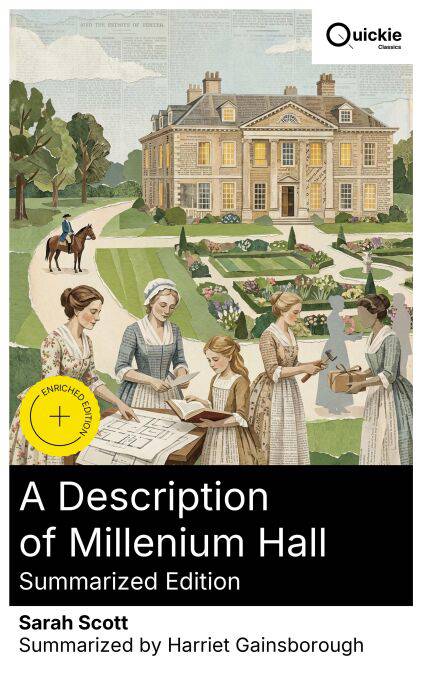
A Description of Millenium Hall (Summarized Edition) E-BOOK
Enriched edition. An 18th-Century Epistolary Tale of Female Empowerment, Gender Dynamics, and an Independent Community in a Secluded Estate
Sarah Scott
E-book | Engels
€ 1,99
+ 1 punten
Omschrijving
First published in 1762, A Description of Millenium Hall refashions the sentimental novel into a female utopia. A male traveler's visit frames exemplary histories, in which trials—abduction, coercive courtship, precarious fortunes—are converted into philanthropy, education, and rational household economy. Scott's lucid style couples moral reflection with social critique, exposing marriage markets and masculine prerogative. Situated in Bluestocking culture, the book borrows conduct literature's didacticism while testing utopia's architecture: a self‑supporting community that organizes labor, charity, and taste to make virtue practicable. Sarah Scott, sister to Bluestocking leader Elizabeth Montagu, wrote after a brief, unhappy marriage and a turn to independent living and charitable work. Her collaborations and hands‑on philanthropy—especially in women's education and relief for the poor—inform the novel's administrative detail and moral confidence. Steeped in Anglican piety and Enlightenment ethics, Scott converts lived experiment into fiction, imagining the institutions she helped to build. Millenium Hall will reward readers of early feminist thought, utopian studies, and eighteenth‑century fiction. It suits courses on women's writing and social reform, and general readers curious about practical blueprints for ethical community. Read it for its humane rigor, its experiments in cooperative life, and its invitation to rethink virtue as something organized, not merely felt.
Quickie Classics summarizes timeless works with precision, preserving the author's voice and keeping the prose clear, fast, and readable—distilled, never diluted. Enriched Edition extras: Introduction · Synopsis · Historical Context · Brief Analysis · 4 Reflection Q&As · Editorial Footnotes.
Quickie Classics summarizes timeless works with precision, preserving the author's voice and keeping the prose clear, fast, and readable—distilled, never diluted. Enriched Edition extras: Introduction · Synopsis · Historical Context · Brief Analysis · 4 Reflection Q&As · Editorial Footnotes.
Specificaties
Betrokkenen
- Auteur(s):
- Uitgeverij:
Inhoud
- Aantal bladzijden:
- 110
- Taal:
- Engels
Eigenschappen
- Productcode (EAN):
- 8596547883180
- Verschijningsdatum:
- 9/01/2026
- Uitvoering:
- E-book
- Beveiligd met:
- Digital watermarking
- Formaat:
- ePub


Alleen bij Standaard Boekhandel
+ 1 punten op je klantenkaart van Standaard Boekhandel
Cadeau

AANGERADEN


Beoordelingen
We publiceren alleen reviews die voldoen aan de voorwaarden voor reviews. Bekijk onze voorwaarden voor reviews.