



Bedankt voor het vertrouwen het afgelopen jaar! Om jou te bedanken bieden we GRATIS verzending (in België) aan op alles gedurende de hele maand januari.
- Afhalen na 1 uur in een winkel met voorraad
- Gratis thuislevering in België vanaf € 30
- Ruim aanbod met 7 miljoen producten
Bedankt voor het vertrouwen het afgelopen jaar! Om jou te bedanken bieden we GRATIS verzending (in België) aan op alles gedurende de hele maand januari.
- Afhalen na 1 uur in een winkel met voorraad
- Gratis thuislevering in België vanaf € 30
- Ruim aanbod met 7 miljoen producten





€ 34,95
+ 69 punten
Omschrijving
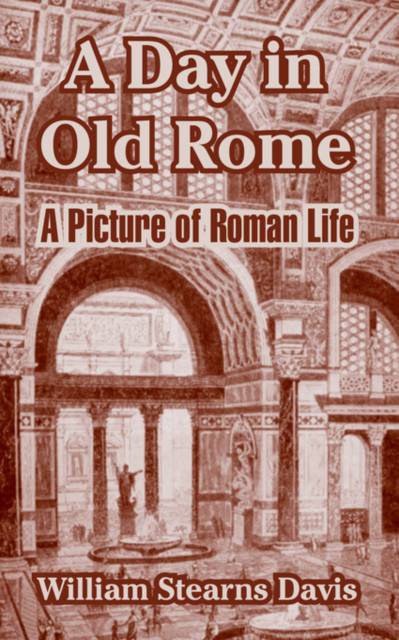
This book tries to describe what an intelligent person would have witnessed in Ancient Rome if by some legerdemain he had been translated to the Second Christian Century, and conducted about the imperial city under competent guidance. The year 134 after Christ has been chosen as the hypothetical time of this visit, not from any special virtue in that date, but because Rome was then architecturally nearly completed, the Empire seemed in its most prosperous state, although many of the old usages and traditions of the Republic still survived, and the evil days of decadence were as yet hardly visible in the background. The time of the absence of Hadrian from his capital was selected particularly, in order that interest could be concentrated upon the life and doings of the great city itself, and upon its vast populace of slaves, plebeians, and nobles, not upon the splendid despot and his court, matters too often the center for attention by students of the Roman past. At the time of original publication in 1925, William Stearns Davis was Professor of Ancient History, University of Minnesota.
Specificaties
Betrokkenen
- Auteur(s):
- Uitgeverij:
Inhoud
- Aantal bladzijden:
- 512
- Taal:
- Engels
Eigenschappen
- Productcode (EAN):
- 9781410213631
- Verschijningsdatum:
- 5/06/2004
- Uitvoering:
- Paperback
- Formaat:
- Trade paperback (VS)
- Afmetingen:
- 128 mm x 203 mm
- Gewicht:
- 562 g


Alleen bij Standaard Boekhandel
+ 69 punten op je klantenkaart van Standaard Boekhandel
CADEAU


Beoordelingen
We publiceren alleen reviews die voldoen aan de voorwaarden voor reviews. Bekijk onze voorwaarden voor reviews.